
Genuine Leather Belt or PU Belt? A Professional Buying Guide
Genuine leather belt vs. PU belt — compare durability, cost, and use cases with this professional buying guide before you make your next purchase.
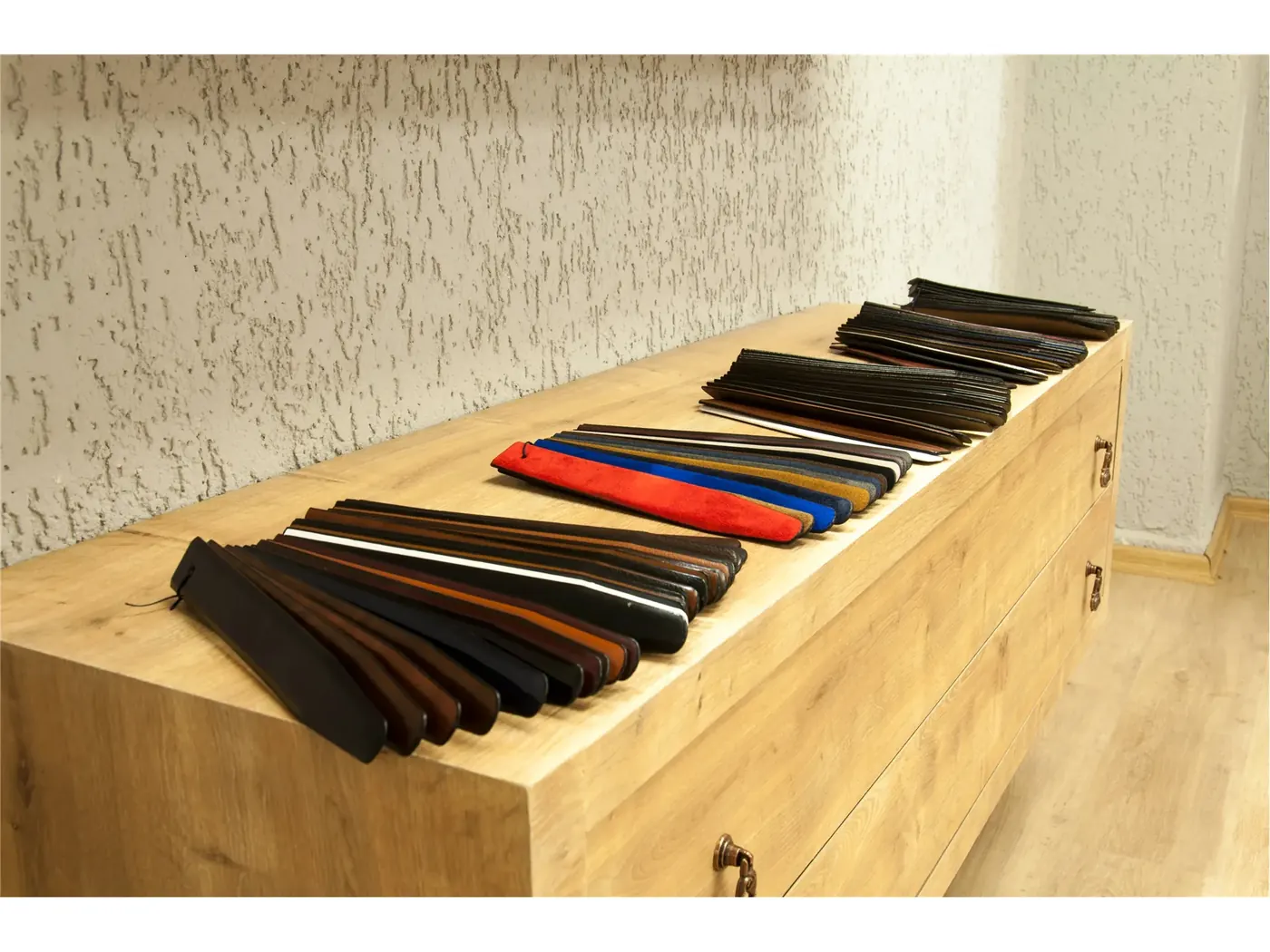
Genuine leather belt or pu belt
Genuine Leather Belt or PU Belt? A Professional Buying Guide
Genuine leather belt or pu belt
Genuine leather belt or pu belt
Genuine Leather Belt or PU Belt? A Professional Buying GuideGenuine leather beltorPU belt— this is the first question both individual shoppers andwholesale beltbuyers need to answer before making a purchase. The two products can look nearly identical at first glance, yet they differ completely in material, manufacturing method, and long-term performance. This guide walks through the structural differences between genuine leather and PU belts, compares their durability and cost, explains which one fits which use case, and outlines what to look for whensourcing belts wholesale.A large share of products sold under the "leather" label are actually made from raw materials at very different quality levels. That's why a purchasing decision should never rest on the price tag alone — it needs to account for the product's actual structure. For corporate buyers in particular, this distinction is strategically important, since it directly affects customer satisfaction and return rates.What Is Genuine Leather, What Is PU?Genuine leather is a natural material obtained bytanningand processing animal hide. Its natural fiber structure, pores, and flexibility are preserved, giving the product a warm, lively feel that develops character over time. A belt made from genuine leather, with proper care, can last for years and only becomes more distinctive-looking the longer it's used.PU belts, by contrast, are made from a synthetic material calledpolyurethane. Typically a fabric base layer is coated with polyurethane, and the surface pattern is embossed to mimic leather's texture. It can look quite close to real leather at first glance, but its molecular structure is entirely different. That difference shows up clearly over time: PU tends to crack, peel away from its backing, and fade in color after a certain period of use.There's a detail consumers frequently confuse here: the label "genuine leather" does confirm real hide, but it doesn't automatically mean top quality. Genuine leather can be produced from different layers of hide, and quality varies significantly from one manufacturer to another. It's worth knowing that both genuine leather and PU belts have their own internal quality tiers.Types of Genuine Leather BeltsWhen shopping for a genuineleather belt, you're likely to come across the following leather types:Full Grain LeatherFull Grain Leather Belt:Made from the topmost, most durable layer of the hide. Its natural pore structure remains intact, with minimal surface treatment applied. It develops apatinaover time, resists cracking better than any other type, and makes up the majority of premium-segment belts.Top Grain LeatherTop Grain Leather Belt:One layer below full grain; natural surface imperfections are lightly sanded away. It offers a more uniform look, high flexibility, and is a frequent choice for everyday belts.Split LeatherSplit Leather Belt:Made from the lower layers of the hide, usually reinforced with a synthetic surface coating. It costs less than full grain or top grain but is also comparatively less durable.Genuine LeatherGenuine Leather:As noted above, this confirms real leather but doesn't guarantee high quality on its own. Craftsmanship andbelt productiontechnique are the deciding factors within this category.For corporate buyers, understanding this classification makes it much easier to ask the right questions when negotiating with a supplier and to understand the actual quality level being offered. When awholesale beltquote lists "genuine leather," for instance, it's worth asking specifically which leather layer is used and what craftsmanship standard is applied.How PU Belts Are Made, and Where They Make SensePU belt production starts with preparing a fabric backing layer, then applying a polyurethane resin coating to that layer and pressing it with a mold that mimics leather's texture. This process is significantly faster and cheaper than genuine leather production, which is precisely what gives PU belts their price advantage.The main advantages of PU belts include lower cost, uniform appearance (since every piece is identical, color and texture consistency across a batch production run is high), and the fact that they contain no animal-derived materials. PU belts can make sense specifically for brands targeting vegan consumers, businesses producing promotional items, or retailers preparing short-lifespan, seasonal collections.That said, PU's limitations shouldn't be overlooked. The polyurethane layer loses flexibility over time, cracks especially at fold points, and eventually reveals the fabric backing underneath. It's also far less resistant to humidity and temperature changes than genuine leather. For brands aiming to position a long-lasting, premium product, PU is generally not the right choice.Durability Comparison: Which One Lasts Longer?In terms of durability, genuine leather belts have a clear advantage overPU belts. Genuine leather's natural fiber structure can flex under repeated bending and stretching and return to its original shape, which significantly reduces the risk of cracking around the buckle area, the belt holes, and fold points during daily use.PU belts behave differently. Since the polyurethane layer is essentially bonded onto a fabric backing, that bond weakens over time. Tearing around frequently used belt holes, peeling at the edges, and surface dulling are all common. Under average use conditions, a genuine leather belt can typically hold its shape for 5 to 10 years, while a PU belt's usable lifespan is usually limited to 1 to 2 years.This gap matters enormously for wholesale buyers running the numbers: a low unit price on PU belts might look attractive short-term, but higher return rates and lower customer satisfaction can end up costing the brand more over time.Cost and Price ComparisonPU belts have a noticeably lower unit production cost than genuine leather belts, thanks to their synthetic raw material and a production process that's more suited to automation. That makes PU appealing specifically for high-volume, low-price-point collections.Genuine leather belts, on the other hand, carry a higher unit price due to raw material cost, labor time, and quality-control processes. But evaluating that price gap purely on initial purchase cost is misleading. Once you factor in the product's usable lifespan, return rate, and effect on brand perception, genuine leather often delivers a lower cost-per-use in the end.For wholesale buyers, the right approach is to strike an informed balance between the two options based on the target customer's price sensitivity and the brand's positioning. For premium and upper-mid-market brands, genuine leather is almost a necessity, while PU can be a more suitable solution for fast-fashion and promotional product lines.Sensory Tests: Feel, Smell, and Appearance DifferencesA few practical methods can help you tell whether a belt is genuine leather or PU. The first is the touch test: genuine leather warms slightly when bent gently in the hand and shows natural flexibility, while PU tends to feel colder and more uniform.The second method is the smell test. Depending on how it was processed, genuine leather carries its own subtle, natural scent. PU belts, on the other hand, often have a noticeably plastic or chemical smell — particularly pronounced on newer products.The third method is examining the surface pattern. Genuine leather has irregular pores and texture — no two pieces are exactly alike. PU, since its pattern is embossed from a mold, tends to show a repeating, symmetrical texture that becomes obvious on closer inspection.Finally, checking the back of the belt is a reliable method too. Genuine leather's underside has a fibrous, natural texture, while PU belts typically reveal a woven fabric backing. Applying these four checks together gives you enough information to understand a product's real structure before making a purchase decision.Choosing the Right Option by Use CaseThe choice between genuine leather and PU belts largely depends on the context the product will be used in. For corporate attire, formal events,leather belt collections, and premium retail brands, a genuine leatherbeltis the stronger option both aesthetically and in terms of brand perception. Customers in this segment expect the product to last for years and develop character over time.Seasonal collections, promotional items, brands targeting vegan or sustainability-minded consumers, or retailers competing at a very low price point, on the other hand, can find PU belts a more suitable solution. Consumer expectations in this segment are already built around a shorter lifespan and lower price, so PU's limitations aren't perceived as a disadvantage there.Clarifying this distinction duringbelt orderplanning helps businesses manage both inventory and customer expectations correctly. Brands that offer both genuine leather and PU options within the same catalog can meet demand across different price segments from a single supplier.What Sets a Manufacturer Apart in Wholesale SourcingMany manufacturers offer similar product categories in wholesale belt sourcing, but what actually sets one apart is the transparency of its production process and its documented quality standards. Turkey-based manufacturers, for instance, can offer anATR certificate— which provides a customs duty advantage on exports to the European Union and directly improves a wholesale buyer's cost calculation — alongsideREACHcompliance, which confirms the chemicals used meet European safety standards. On top of that, a low minimum order quantity (such as 200 units) makes it easier for a new brand to place a test order, while production capacity reaching up to 150,000 units a month guarantees that growing orders can actually be fulfilled. Concrete, documentable differences like these go beyond a generic "we manufacture quality products" claim and give buyers real assurance — making them one of the most decisive criteria when comparing competing offers.Some manufacturers in this industry don't disclose which leather layer is actually used in products sold as "genuine leather," quietly switch to lower-grade leather in batch production after showing a higher-quality sample, or label PU belts with vague terms like "leather-look" in ways that can mislead buyers. Some businesses also blur the cost difference between genuine leather and PU by selling both at the same price point. We take none of these approaches: we clearly state which leather type (full grain, top grain, genuine leather) or PU is used in every product, guarantee exact material consistency between samples and batch production, and provide documentable quality control on every batch for our wholesale buyers.Care Tips That Extend Usable LifeGenuine leather and PU beltcare needs are also very different. Genuine leather should be kept away from excess moisture and direct sunlight, and occasionally conditioned with leather cream. This simple routine helps the leather retain its flexibility and reduces the risk of cracking. Rotating between a few belts instead of wearing the same one daily also lets the leather fibers rest, extending the product's life.PU offers far fewer care options. Once the polyurethane surface starts cracking or peeling, that process can't be reversed — leather cream and similar products do nothing for a PU surface and can sometimes even damage it. So the right mindset for PU isn't "extend its life through care," but "avoid unnecessary wear under proper use conditions." Avoiding excessive bending and storing it away from humidity can modestly extend aPU belt'sotherwise short lifespan.For wholesale buyers, this care difference also matters for the care instructions and customer information provided alongside the product. Offering a simple care guide for genuine leather items boosts customer satisfaction while signaling the brand's commitment to quality.How to Spot Genuine Leather When Buying OnlineWhile a physical store lets you inspect a belt by hand, that direct sensory testing isn't possible when shopping online. A few things are worth watching for in this case. First, check the terminology used in the product description: sellers using precise terms like "genuine leather," "full grain leather," or "top grain leather" tend to be more transparent. Vague phrases like "leather-look" or "leather-textured" are usually a signal that the product is PU.Second, check whether product photos show the belt's underside. Transparent manufacturers typically show both the front and back clearly. Third, the seller's return policy is a useful trust signal too — brands selling quality genuine leather products tend to offer more flexible return and warranty terms, because they trust their products to last.This principle of transparency matters even more for corporate buyers. Requesting samples before placing a wholesale order, reviewing a manufacturer's certification documents, and visiting the production facility when possible all significantly reduce the risk of choosing the wrong product.Pre-Purchase ChecklistBefore buying a genuine leather or PU belt, it's worth checking the following:Whether the product label clearly states the leather type (full grain, top grain, genuine leather) or PUWhether the leather's back side is fibrous or shows a fabric backingWhether the stitching is regular and consistent in qualityThe buckle material (zinc alloyvs.stainless steel) and how securely it's attachedWhether edge finishing (sanding, dyeing) has been carried out with careFor wholesale orders, the manufacturer's certifications (ATR, REACH, etc.) and quality-control processesClear information on minimum order quantity, production capacity, and delivery timelinesThis checklist significantly reduces the risk of choosing the wrong product for both individual shoppers and corporate buyers.Frequently Asked QuestionsWhy is genuine leather more expensive?Raw material cost, labor time, and quality-control processes are all higher than for PU. However, thanks to its longer lifespan, the cost per use is usually lower in the end.Should PU belts never be used?No — PU can be a sensible solution for seasonal collections, promotional items, or brands targeting vegan consumers. What matters is choosing the material that fits the intended use.Does "genuine leather" always mean high quality?No. Genuine leather confirms the product is real hide, but quality varies by manufacturer. Craftsmanship and production standards are the deciding factor.What documents should be requested for a wholesale order?An ATR certificate, REACH compliance documentation, and any relevant quality management certifications are worth requesting to assess a manufacturer's reliability.The choice between a genuine leather belt and a PU belt, made with the right information, delivers satisfying long-term results for both individual shoppers and corporate buyers. Once material structure, durability, cost, and intended use are weighed together, it becomes clear which product fits which scenario. In wholesale sourcing, a manufacturer's certifications, production capacity, and approach toquality controlremain among the most reliable ways to choose the rightwholesale leather beltsupplier.
Genuine leather beltorPU belt— this is the first question both individual shoppers andwholesale beltbuyers need to answer before making a purchase. The two products can look nearly identical at first glance, yet they differ completely in material, manufacturing method, and long-term performance. This guide walks through the structural differences between genuine leather and PU belts, compares their durability and cost, explains which one fits which use case, and outlines what to look for whensourcing belts wholesale.
A large share of products sold under the "leather" label are actually made from raw materials at very different quality levels. That's why a purchasing decision should never rest on the price tag alone — it needs to account for the product's actual structure. For corporate buyers in particular, this distinction is strategically important, since it directly affects customer satisfaction and return rates.
What Is Genuine Leather, What Is PU?
Genuine leather is a natural material obtained bytanningand processing animal hide. Its natural fiber structure, pores, and flexibility are preserved, giving the product a warm, lively feel that develops character over time. A belt made from genuine leather, with proper care, can last for years and only becomes more distinctive-looking the longer it's used.
PU belts, by contrast, are made from a synthetic material calledpolyurethane. Typically a fabric base layer is coated with polyurethane, and the surface pattern is embossed to mimic leather's texture. It can look quite close to real leather at first glance, but its molecular structure is entirely different. That difference shows up clearly over time: PU tends to crack, peel away from its backing, and fade in color after a certain period of use.
There's a detail consumers frequently confuse here: the label "genuine leather" does confirm real hide, but it doesn't automatically mean top quality. Genuine leather can be produced from different layers of hide, and quality varies significantly from one manufacturer to another. It's worth knowing that both genuine leather and PU belts have their own internal quality tiers.
Types of Genuine Leather Belts
When shopping for a genuineleather belt, you're likely to come across the following leather types:
Full Grain Leather
Full Grain Leather Belt:Made from the topmost, most durable layer of the hide. Its natural pore structure remains intact, with minimal surface treatment applied. It develops apatinaover time, resists cracking better than any other type, and makes up the majority of premium-segment belts.
Top Grain Leather
Top Grain Leather Belt:One layer below full grain; natural surface imperfections are lightly sanded away. It offers a more uniform look, high flexibility, and is a frequent choice for everyday belts.
Split Leather Belt:Made from the lower layers of the hide, usually reinforced with a synthetic surface coating. It costs less than full grain or top grain but is also comparatively less durable.
Genuine Leather:As noted above, this confirms real leather but doesn't guarantee high quality on its own. Craftsmanship andbelt productiontechnique are the deciding factors within this category.
For corporate buyers, understanding this classification makes it much easier to ask the right questions when negotiating with a supplier and to understand the actual quality level being offered. When awholesale beltquote lists "genuine leather," for instance, it's worth asking specifically which leather layer is used and what craftsmanship standard is applied.
How PU Belts Are Made, and Where They Make Sense
PU belt production starts with preparing a fabric backing layer, then applying a polyurethane resin coating to that layer and pressing it with a mold that mimics leather's texture. This process is significantly faster and cheaper than genuine leather production, which is precisely what gives PU belts their price advantage.
The main advantages of PU belts include lower cost, uniform appearance (since every piece is identical, color and texture consistency across a batch production run is high), and the fact that they contain no animal-derived materials. PU belts can make sense specifically for brands targeting vegan consumers, businesses producing promotional items, or retailers preparing short-lifespan, seasonal collections.
That said, PU's limitations shouldn't be overlooked. The polyurethane layer loses flexibility over time, cracks especially at fold points, and eventually reveals the fabric backing underneath. It's also far less resistant to humidity and temperature changes than genuine leather. For brands aiming to position a long-lasting, premium product, PU is generally not the right choice.
Durability Comparison: Which One Lasts Longer?
In terms of durability, genuine leather belts have a clear advantage overPU belts. Genuine leather's natural fiber structure can flex under repeated bending and stretching and return to its original shape, which significantly reduces the risk of cracking around the buckle area, the belt holes, and fold points during daily use.
PU belts behave differently. Since the polyurethane layer is essentially bonded onto a fabric backing, that bond weakens over time. Tearing around frequently used belt holes, peeling at the edges, and surface dulling are all common. Under average use conditions, a genuine leather belt can typically hold its shape for 5 to 10 years, while a PU belt's usable lifespan is usually limited to 1 to 2 years.
This gap matters enormously for wholesale buyers running the numbers: a low unit price on PU belts might look attractive short-term, but higher return rates and lower customer satisfaction can end up costing the brand more over time.
Cost and Price Comparison
PU belts have a noticeably lower unit production cost than genuine leather belts, thanks to their synthetic raw material and a production process that's more suited to automation. That makes PU appealing specifically for high-volume, low-price-point collections.
Genuine leather belts, on the other hand, carry a higher unit price due to raw material cost, labor time, and quality-control processes. But evaluating that price gap purely on initial purchase cost is misleading. Once you factor in the product's usable lifespan, return rate, and effect on brand perception, genuine leather often delivers a lower cost-per-use in the end.
For wholesale buyers, the right approach is to strike an informed balance between the two options based on the target customer's price sensitivity and the brand's positioning. For premium and upper-mid-market brands, genuine leather is almost a necessity, while PU can be a more suitable solution for fast-fashion and promotional product lines.
Sensory Tests: Feel, Smell, and Appearance Differences
A few practical methods can help you tell whether a belt is genuine leather or PU. The first is the touch test: genuine leather warms slightly when bent gently in the hand and shows natural flexibility, while PU tends to feel colder and more uniform.
The second method is the smell test. Depending on how it was processed, genuine leather carries its own subtle, natural scent. PU belts, on the other hand, often have a noticeably plastic or chemical smell — particularly pronounced on newer products.
The third method is examining the surface pattern. Genuine leather has irregular pores and texture — no two pieces are exactly alike. PU, since its pattern is embossed from a mold, tends to show a repeating, symmetrical texture that becomes obvious on closer inspection.
Finally, checking the back of the belt is a reliable method too. Genuine leather's underside has a fibrous, natural texture, while PU belts typically reveal a woven fabric backing. Applying these four checks together gives you enough information to understand a product's real structure before making a purchase decision.
Choosing the Right Option by Use Case
The choice between genuine leather and PU belts largely depends on the context the product will be used in. For corporate attire, formal events,leather belt collections, and premium retail brands, a genuine leatherbeltis the stronger option both aesthetically and in terms of brand perception. Customers in this segment expect the product to last for years and develop character over time.
Seasonal collections, promotional items, brands targeting vegan or sustainability-minded consumers, or retailers competing at a very low price point, on the other hand, can find PU belts a more suitable solution. Consumer expectations in this segment are already built around a shorter lifespan and lower price, so PU's limitations aren't perceived as a disadvantage there.
Clarifying this distinction duringbelt orderplanning helps businesses manage both inventory and customer expectations correctly. Brands that offer both genuine leather and PU options within the same catalog can meet demand across different price segments from a single supplier.
What Sets a Manufacturer Apart in Wholesale Sourcing
Many manufacturers offer similar product categories in wholesale belt sourcing, but what actually sets one apart is the transparency of its production process and its documented quality standards. Turkey-based manufacturers, for instance, can offer anATR certificate— which provides a customs duty advantage on exports to the European Union and directly improves a wholesale buyer's cost calculation — alongsideREACHcompliance, which confirms the chemicals used meet European safety standards. On top of that, a low minimum order quantity (such as 200 units) makes it easier for a new brand to place a test order, while production capacity reaching up to 150,000 units a month guarantees that growing orders can actually be fulfilled. Concrete, documentable differences like these go beyond a generic "we manufacture quality products" claim and give buyers real assurance — making them one of the most decisive criteria when comparing competing offers.
Some manufacturers in this industry don't disclose which leather layer is actually used in products sold as "genuine leather," quietly switch to lower-grade leather in batch production after showing a higher-quality sample, or label PU belts with vague terms like "leather-look" in ways that can mislead buyers. Some businesses also blur the cost difference between genuine leather and PU by selling both at the same price point. We take none of these approaches: we clearly state which leather type (full grain, top grain, genuine leather) or PU is used in every product, guarantee exact material consistency between samples and batch production, and provide documentable quality control on every batch for our wholesale buyers.
Care Tips That Extend Usable Life
Genuine leather and PU beltcare needs are also very different. Genuine leather should be kept away from excess moisture and direct sunlight, and occasionally conditioned with leather cream. This simple routine helps the leather retain its flexibility and reduces the risk of cracking. Rotating between a few belts instead of wearing the same one daily also lets the leather fibers rest, extending the product's life.
PU offers far fewer care options. Once the polyurethane surface starts cracking or peeling, that process can't be reversed — leather cream and similar products do nothing for a PU surface and can sometimes even damage it. So the right mindset for PU isn't "extend its life through care," but "avoid unnecessary wear under proper use conditions." Avoiding excessive bending and storing it away from humidity can modestly extend aPU belt'sotherwise short lifespan.
For wholesale buyers, this care difference also matters for the care instructions and customer information provided alongside the product. Offering a simple care guide for genuine leather items boosts customer satisfaction while signaling the brand's commitment to quality.
How to Spot Genuine Leather When Buying Online
While a physical store lets you inspect a belt by hand, that direct sensory testing isn't possible when shopping online. A few things are worth watching for in this case. First, check the terminology used in the product description: sellers using precise terms like "genuine leather," "full grain leather," or "top grain leather" tend to be more transparent. Vague phrases like "leather-look" or "leather-textured" are usually a signal that the product is PU.
Second, check whether product photos show the belt's underside. Transparent manufacturers typically show both the front and back clearly. Third, the seller's return policy is a useful trust signal too — brands selling quality genuine leather products tend to offer more flexible return and warranty terms, because they trust their products to last.
This principle of transparency matters even more for corporate buyers. Requesting samples before placing a wholesale order, reviewing a manufacturer's certification documents, and visiting the production facility when possible all significantly reduce the risk of choosing the wrong product.
Pre-Purchase Checklist
Before buying a genuine leather or PU belt, it's worth checking the following:
Whether the product label clearly states the leather type (full grain, top grain, genuine leather) or PU
Whether the leather's back side is fibrous or shows a fabric backing
Whether the stitching is regular and consistent in quality
The buckle material (zinc alloyvs.stainless steel) and how securely it's attached
Whether edge finishing (sanding, dyeing) has been carried out with care
For wholesale orders, the manufacturer's certifications (ATR, REACH, etc.) and quality-control processes
Clear information on minimum order quantity, production capacity, and delivery timelines
This checklist significantly reduces the risk of choosing the wrong product for both individual shoppers and corporate buyers.
Frequently Asked Questions
Why is genuine leather more expensive?Raw material cost, labor time, and quality-control processes are all higher than for PU. However, thanks to its longer lifespan, the cost per use is usually lower in the end.
Should PU belts never be used?No — PU can be a sensible solution for seasonal collections, promotional items, or brands targeting vegan consumers. What matters is choosing the material that fits the intended use.
Does "genuine leather" always mean high quality?No. Genuine leather confirms the product is real hide, but quality varies by manufacturer. Craftsmanship and production standards are the deciding factor.
What documents should be requested for a wholesale order?An ATR certificate, REACH compliance documentation, and any relevant quality management certifications are worth requesting to assess a manufacturer's reliability.
The choice between a genuine leather belt and a PU belt, made with the right information, delivers satisfying long-term results for both individual shoppers and corporate buyers. Once material structure, durability, cost, and intended use are weighed together, it becomes clear which product fits which scenario. In wholesale sourcing, a manufacturer's certifications, production capacity, and approach toquality controlremain among the most reliable ways to choose the rightwholesale leather beltsupplier.
+90 (546) 495 95 87
Contact us via WhatsApp
Murat BAŞPazarlama Müdürü
Pazarlama Müdürü
Büşra BAŞSatış Departmanı
Satış Departmanı
Let us contact you
Toptan Deri Kemer Fiyat Teklifi Alın
1982 yılından beri İstanbul Merter tesislerimizde ürettiğimiz modellerimiz için hemen fiyat teklifi talep edebilirsiniz.