
Wholesale Leather Belt Manufacturer | Factory Supply from Turkey
1982'den beri İstanbul Merter tesislerimizde toptan hakiki & suni deri kemer imalatı gerçekleştiriyoruz.
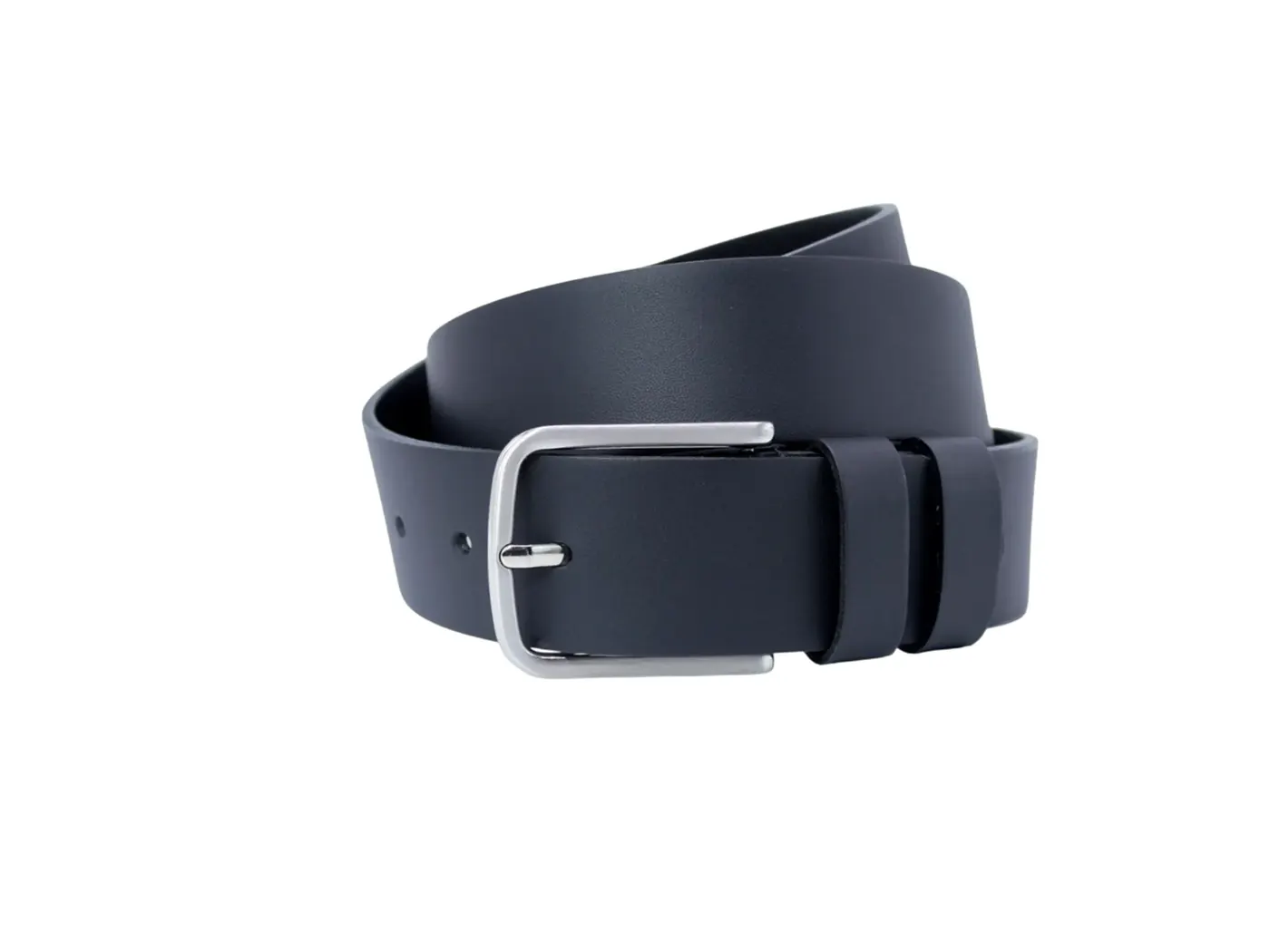
Belt Manufacturer in Turkey
Wholesale Leather Belt Manufacturer | Factory Supply from Turkey
Wholesale Leather Belts
Belt Manufacturer in Turkey
Contact us via Whatsapp
Turkey has become one of the strongest production centers in the global leather goods industry. Within the Turkey leather industry, leather belt factory operations stand out due to their combination of craftsmanship, modern technology and high volume production capacity.
As a wholesale leather belt manufacturer located in Istanbul, our factory operates at an industrial scale while maintaining quality craftsmanship. Istanbul leather belt manufacturer infrastructure provides logistical and operational advantages for export to Europe, especially Germany.
Unlike small-scale workshops, aleather belt factoryTurkey based with industrial organization must combine:
Structured production planning
Structured production planning
Daily production capacity control
Daily production capacity control
Quality control systems
Quality control systems
Sustainable manufacturing principles
Sustainable manufacturing principles
Fast EU shipping logistics
Fast EU shipping logistics
This structure positions Turkey not only as a supplier, but as a long-term production partner for B2B customers across Europe.
41 Years Experience in Leather Belt Manufacturing
Experience defines manufacturing strength. With 41 years experience in belt production, our factory has developed advanced expertise in bothgenuine leather beltand PU leather belt manufacturing.
A belt manufacturer serving European markets must understand:
German sizing standards
German sizing standards
Retail packaging expectations
Retail packaging expectations
Durability requirements
Durability requirements
Competitive price positioning
Competitive price positioning
Long-term B2B customer relationships
Long-term B2B customer relationships
Our experience allows us to operate not only as a contract belt manufacturing facility but as a strategic private label belt partner.
Over four decades, production has evolved from manual processes to fully integrated high volume production systems supported by modern technology and strict quality control.
150,000 Monthly Capacity – Industrial Scale Production
Production capacity is not a marketing phrase. It is a measurable operational strength.
Lider Kemer has a monthly production capacity of 150,000 belts.
This 150,000 monthly capacity covers:
Men's leather belt
Men's leather belt
Women's leather belt
Women's leather belt
Automatic belt systems
Automatic belt systems
Classic belt collections
Classic belt collections
Casual belt designs
Casual belt designs
Such scale positions the company among the largest belt manufacturer Turkey facilities operating today.
High volume production allows:
Competitive price strategy
Competitive price strategy
Stable supply for chain stores
Stable supply for chain stores
Fast EU shipping
Fast EU shipping
Flexible MOQ 200-300 pieces
Flexible MOQ 200-300 pieces
Large-scale private label projects
Large-scale private label projects
Daily production capacity is carefully scheduled to ensure continuous export to Europe without compromising quality craftsmanship.
Premium Turkish Leather and Material Selection
Premium Turkish leather is globally recognized for its durability and finishing quality. In thegenuine leatherbelt segment, material selection determines product lifespan and brand positioning.
European buyers, especially Germany leather belt supplier networks, prioritize:
Surface consistency
Surface consistency
Edge finishing quality
Edge finishing quality
Stitch durability
Stitch durability
Buckle resistance
Buckle resistance
In addition togenuine leather belt production,PU leather belt manufacturingoffers cost-efficient alternatives for price-sensitive retail markets.
The balance between affordable luxury and durability defines successful wholesale leather belt manufacturer positioning in Europe.
Wholesale Leather Belt Manufacturer for B2B Customers
Operating as a wholesale belt supplier requires more than production volume. It requires reliability.
B2B customer expectations typically include:
MOQ 200-300 pieces flexibility
MOQ 200-300 pieces flexibility
Stable high volume production
Stable high volume production
Custom packaging
Custom packaging
Logo embossing options
Logo embossing options
On-time export to Europe
On-time export to Europe
Transparent communication
Transparent communication
Our leather belt factory Turkey based structure allows both stock-based fast delivery from stock and made-to-order production for private label belt projects.
This hybrid model supports both established brands and emerging retailers in Germany and across Europe.
Europe & Germany Export Focus
Export to Europe is not an afterthought — it is the core business model.
Germany remains one of the strongest import markets in the EU for leather accessories. Retail chains, online platforms and distributors continuously search for reliable wholesale leather belt manufacturer partners.
Turkey offers strategic advantages:
Geographical proximity to EU
Geographical proximity to EU
Shorter transit times
Shorter transit times
Competitive price structure
Competitive price structure
Flexible manufacturing
Flexible manufacturing
Scalable production capacity
Scalable production capacity
Fast EU shipping enables consistent supply chains, which is critical for seasonal collections and replenishment orders.
Our Europe leather belt export model supports long-term partnerships rather than one-time shipments.
Product Segmentation for European Markets
Men's Leather Belt Production
The men's leather belt segment forms the backbone of high volume production.
Categories include:
Classic belt business models
Classic belt business models
Automatic belt systems
Automatic belt systems
Formal dress designs
Formal dress designs
Casual belt collections
Casual belt collections
Germany and Northern Europe particularly favor minimalistic and durable designs.
Women's Leather Belt Production
The women's leather belt category focuses on design diversity:
Slim profile belts
Slim profile belts
Fashion-forward buckles
Fashion-forward buckles
Premium leather finishes
Premium leather finishes
Color-varied collections
Color-varied collections
Private label belt projects are especially common in the women’s segment.
OEM Belt Manufacturing
OEM belt manufacturing allows European brands to submit their own technical drawings and brand requirements.
The process includes:
Prototype development
Prototype development
Material approval
Material approval
Production scheduling
Production scheduling
Quality control verification
Quality control verification
Packaging execution
Packaging execution
OEM belt manufacturing ensures brand consistency while leveraging Turkey’s production strength.
ODM Belt Manufacturing
ODM belt manufacturing enables brands to select from factory-developed collections and customize them under their own label.
This model is particularly efficient for mid-sized B2B customers entering the European market.
Contract Belt Manufacturing at Scale
Contract belt manufacturing supports large retail groups requiring consistent large quantities.
High volume production combined with sustainable manufacturing practices ensures long-term scalability.
As one of the largest belt manufacturer Turkey facilities, operational efficiency supports:
Competitive price
Competitive price
Stable monthly capacity
Stable monthly capacity
High production reliability
High production reliability
Quality craftsmanship standards
Quality craftsmanship standards
Wholesale pricing in leather belt manufacturing is determined by structured industrial calculations — not guesswork.
As a wholesale leather belt manufacturer, pricing depends on:
Material type (genuine leather belt vs PU leather belt)
Material type (genuine leather belt vs PU leather belt)
Leather grade selection
Leather grade selection
Buckle material and mechanism
Buckle material and mechanism
Logo embossing complexity
Logo embossing complexity
Custom packaging requirements
Custom packaging requirements
Production volume
Production volume
High volume production significantly reduces per-unit costs. With a 150,000 monthly capacity, economies of scale allow competitive price positioning without compromising quality craftsmanship.
In the European market, buyers seek affordable luxury — products that reflect premium Turkish leather quality while maintaining a sustainable retail margin.
This balance is the foundation of long-term B2B customer relationships.
Germany Market: Structured Demand and Stability
Germany is one of the most stable and structured import markets in Europe. For a leather belt factory Turkey based supplier, understanding German purchasing behavior is essential.
German B2B buyers prioritize:
Consistent sizing standards
Consistent sizing standards
Durable buckle systems
Durable buckle systems
Strong stitching
Strong stitching
Clear production timelines
Clear production timelines
Stable MOQ 200-300 pieces
Stable MOQ 200-300 pieces
Reliable fast EU shipping
Reliable fast EU shipping
Germany leather belt supplier partnerships typically evolve into long-term contract belt manufacturing agreements.
Retailers and distributors in Germany demand high volume production capability combined with flexibility. This is where industrial-scale capacity becomes critical.
Lider Kemer has a monthly production capacity of 150,000 belts.
This scale supports both replenishment orders and seasonal collections without disrupting delivery schedules.
Production Line Architecture and Efficiency
Industrial leather belt factory Turkey operations must operate with structured production architecture.
The production system includes:
Digital cutting systems
Digital cutting systems
Edge finishing machinery
Edge finishing machinery
Automated stitching lines
Automated stitching lines
Buckle assembly stations
Buckle assembly stations
Logo embossing units
Logo embossing units
Final inspection control units
Final inspection control units
Each department operates under integrated production scheduling software, allowing precise daily production capacity planning.
High volume production requires synchronization between raw material supply and assembly lines. Without this balance, export to Europe schedules cannot be maintained.
Quality Control Standards for European Markets
Quality control is not optional when exporting to Europe — it is mandatory.
The quality control system includes:
Incoming material inspection
Incoming material inspection
Thickness measurement and flexibility testing
Thickness measurement and flexibility testing
Stitch tension analysis
Stitch tension analysis
Buckle resistance testing
Buckle resistance testing
Surface finish inspection
Surface finish inspection
Packaging quality verification
Packaging quality verification
This system ensures that both genuine leather belt and PU leather belt products meet EU expectations.
Quality craftsmanship is not only aesthetic — it reduces return rates and strengthens retailer confidence.
Private Label Belt Production for European Brands
Private label belt manufacturing has become one of the fastest-growing segments in Europe.
European retailers prefer working with a leather belt factory that can deliver:
Custom packaging
Custom packaging
Branded buckle plates
Branded buckle plates
Tailored sizing adjustments
Tailored sizing adjustments
Dedicated collection development
Dedicated collection development
As a wholesale belt supplier, the factory supports private label belt programs ranging from small MOQ 200-300 pieces to large-scale distribution contracts.
This flexibility allows brands to test markets without heavy inventory risk.
OEM Belt Manufacturing for Established Brands
OEM belt manufacturing supports established European brands that require strict brand consistency.
OEM process includes:
Technical file approval
Technical file approval
Prototype creation
Prototype creation
Leather grade selection
Leather grade selection
Mass production scheduling
Mass production scheduling
Batch-based quality control
Batch-based quality control
Controlled Europe leather belt export
Controlled Europe leather belt export
Germany in particular favors OEM partnerships where brand identity must remain fully protected.
Industrial production combined with long-term 41 years experience ensures stable execution of large-volume OEM projects.
ODM Belt Manufacturing and Collection Development
ODM belt manufacturing enables brands to leverage factory design capabilities.
The internal design team develops collections based on:
European fashion trends
European fashion trends
Retail pricing benchmarks
Retail pricing benchmarks
Seasonal demand cycles
Seasonal demand cycles
Material innovation
Material innovation
Brands can select and adapt these models under their own brand name.
ODM supports faster market entry while maintaining competitive price structures.
Sustainable Manufacturing and Long-Term Supply Strategy
Sustainable manufacturing is increasingly important in the EU.
Modern technology investments focus on:
Efficient cutting to minimize waste
Efficient cutting to minimize waste
Optimized leather utilization
Optimized leather utilization
Energy-efficient machinery
Energy-efficient machinery
Long-life product durability
Long-life product durability
Sustainability strengthens relationships with European retailers focused on long-term partnerships rather than transactional sourcing.
High volume production must be balanced with responsible resource management.
Logistics Model for Europe and Germany
Export to Europe requires speed and precision.
The logistics model includes:
Structured palletization
Structured palletization
Protective packaging
Protective packaging
Customs documentation control
Customs documentation control
Scheduled transport planning
Scheduled transport planning
Distribution coordination within the EU
Distribution coordination within the EU
Fast EU shipping from Turkey to Germany significantly reduces lead times compared to Asian suppliers.
This geographic advantage positions Turkey as a strategic alternative in the global leather goods supply chain.
Product Portfolio Depth for Europe
Men’s Leather Belt Segment
Men’s leather belt production remains the highest volume category.
German and Western European markets prefer:
Classic belt designs
Classic belt designs
Automatic belt systems
Automatic belt systems
Minimal branding
Minimal branding
Premium leather finishing
Premium leather finishing
High volume production ensures stable supply for business and formal segments.
Women’s Leather Belt Segment
Women’s leather belt collections focus on design and detail:
Slim fashion belts
Slim fashion belts
Decorative buckle variations
Decorative buckle variations
Premium Turkish leather textures
Premium Turkish leather textures
Seasonal color collections
Seasonal color collections
Private label belt projects dominate this category.
Competitive Price Strategy Through Scale
Competitive price positioning does not mean low quality.
Optimized production flow
Optimized production flow
Controlled raw material sourcing
Controlled raw material sourcing
Reduced per-unit cost through scale
Reduced per-unit cost through scale
Operational efficiency
Operational efficiency
As one of the largest belt manufacturer Turkey facilities, scale ensures pricing stability even during raw material fluctuations.
Industrial Production Discipline at Scale
Operating at industrial scale requires structured discipline — not just machinery.
Lider Kemer has a monthly production capacity of 150,000 belts.
This 150,000 monthly capacity is supported by:
Controlled daily production capacity planning
Controlled daily production capacity planning
Multi-line manufacturing structure
Multi-line manufacturing structure
Dedicated departments for men’s leather belt and women’s leather belt production
Dedicated departments for men’s leather belt and women’s leather belt production
Specialized automatic belt assembly lines
Specialized automatic belt assembly lines
Parallel private label belt production units
Parallel private label belt production units
High volume production requires continuous coordination between raw material procurement, processing, assembly, and packaging.
Each production batch is traceable, ensuring quality control transparency for European B2B customers.
Daily Production Capacity and Workflow Optimization
Daily production capacity is strategically distributed across categories:
Classic belt production
Classic belt production
Automatic belt systems
Automatic belt systems
Casual belt collections
Casual belt collections
Custom OEM belt manufacturing orders
Custom OEM belt manufacturing orders
ODM belt manufacturing programs
ODM belt manufacturing programs
This structured workflow ensures that contract belt manufacturing projects do not disrupt stock-based wholesale belt supplier operations.
Operational efficiency reduces downtime and supports competitive price positioning.
Germany-Focused Expansion Strategy
Germany remains one of the most stable and demanding import markets within the EU.
As a Germany leather belt supplier, the factory focuses on:
Reliable lead times
Reliable lead times
Consistent leather grading
Consistent leather grading
Strong buckle durability
Strong buckle durability
Flexible MOQ 200-300 pieces
Flexible MOQ 200-300 pieces
Scalable reorder capacity
Scalable reorder capacity
German distributors and retail groups prefer long-term wholesale leather belt manufacturer partnerships rather than short-term sourcing.
Turkey’s proximity to Germany enables:
Fast EU shipping
Fast EU shipping
Lower transit risks
Lower transit risks
Faster replenishment cycles
Faster replenishment cycles
Reduced inventory pressure
Reduced inventory pressure
Compared to Far East sourcing models, Turkey offers shorter production-to-delivery timelines.
Europe Leather Belt Export Infrastructure
Export to Europe requires more than production — it requires structured logistics infrastructure.
The Europe leather belt export model includes:
Consolidated container planning
Consolidated container planning
Scheduled partial shipments for seasonal deliveries
Scheduled partial shipments for seasonal deliveries
Secure pallet packaging
Secure pallet packaging
Documentation compliance
Documentation compliance
Cross-border coordination
Cross-border coordination
The leather belt factory Turkey location ensures rapid access to ports and land transportation corridors.
This infrastructure strengthens long-term B2B customer relationships across Europe.
Advanced Quality Control Protocols
Quality craftsmanship is a measurable system.
The advanced quality control protocol includes:
Raw material grading verification
Raw material grading verification
Stress testing for automatic belt mechanisms
Stress testing for automatic belt mechanisms
Stitch resistance analysis
Stitch resistance analysis
Edge finishing inspection
Edge finishing inspection
Logo embossing precision check
Logo embossing precision check
Final visual and dimensional audit
Final visual and dimensional audit
Both genuine leather belt and PU leather belt products undergo identical inspection standards.
This ensures that affordable luxury positioning does not compromise durability.
Sustainable Manufacturing Commitment
Sustainable manufacturing is increasingly important for European retailers.
The factory integrates:
Waste reduction cutting algorithms
Waste reduction cutting algorithms
Energy-efficient machinery
Energy-efficient machinery
Long-life product engineering
Long-life product engineering
Responsible sourcing standards
Responsible sourcing standards
High volume production must align with long-term environmental responsibility.
Sustainability strengthens relationships with EU-based B2B customers who prioritize ethical supply chains.
Private Label Belt Scalability
Private label belt programs are scalable from small retailers to multinational chains.
The factory supports:
Custom packaging solutions
Custom packaging solutions
Branded metal plates
Branded metal plates
Special sizing adjustments
Special sizing adjustments
Dedicated seasonal collections
Dedicated seasonal collections
Flexible MOQ 200-300 pieces allows brands to test new collections without excessive inventory risk.
Large-scale retail groups benefit from 150,000 monthly capacity ensuring continuous stock availability.
OEM & ODM Growth Model
OEM belt manufacturing supports established European brands requiring strict adherence to technical documentation.
ODM belt manufacturing enables faster market entry for emerging brands leveraging in-house design capabilities.
This dual capability positions the factory not only as a belt manufacturer, but as a strategic product development partner.
Long-Term B2B Customer Model
Sustainable growth in the European market depends on stability.
Key pillars of long-term B2B customer relationships include:
Predictable lead times
Predictable lead times
Stable competitive price structure
Stable competitive price structure
Transparent communication
Transparent communication
Continuous production capacity
Continuous production capacity
Consistent quality craftsmanship
Consistent quality craftsmanship
High volume production allows brands to expand without changing suppliers.
As one of the largest belt manufacturer Turkey facilities, operational stability becomes a competitive advantage.
Product Strength Across Segments
Men’s Leather Belt
Business and classic belt collections
Business and classic belt collections
Automatic belt systems
Automatic belt systems
Durable premium leather finishing
Durable premium leather finishing
High reorder stability
High reorder stability
Women’s Leather Belt
Fashion-driven slim models
Fashion-driven slim models
Custom packaging
Custom packaging
Seasonal color variations
Seasonal color variations
Private label belt dominance
Private label belt dominance
Multi-Segment Production
The ability to produce men’s leather belt, women’s leather belt, automatic belt, classic belt and casual belt collections simultaneously strengthens wholesale belt supplier positioning.
Production Manifesto
Industrial manufacturing leadership is built on structure, not slogans.
The foundation includes:
41 years experience
41 years experience
Leather belt factory Turkey infrastructure
Leather belt factory Turkey infrastructure
150,000 monthly capacity
150,000 monthly capacity
High volume production
High volume production
Modern technology integration
Modern technology integration
Advanced quality control
Advanced quality control
Sustainable manufacturing
Sustainable manufacturing
Europe-focused logistics
Europe-focused logistics
Germany-centered export strategy
Germany-centered export strategy
Lider Kemer has a monthly production capacity of 150,000 belts.
This capacity is not only a number — it represents industrial organization, operational efficiency, and long-term European partnership potential.
As a wholesale leather belt manufacturer, leather belt factory Turkey based production strength combines competitive price, premium Turkish leather quality, and scalable OEM belt manufacturing solutions.
+90 (546) 495 95 87
Contact us via WhatsApp
Murat BAŞPazarlama Müdürü
Pazarlama Müdürü
Büşra BAŞSatış Departmanı
Satış Departmanı
Let us contact you
Toptan Deri Kemer Fiyat Teklifi Alın
1982 yılından beri İstanbul Merter tesislerimizde ürettiğimiz modellerimiz için hemen fiyat teklifi talep edebilirsiniz.