
Belt Guide 2026: Size, Measurement Chart, Wearing Direction & Leather Selection
How to measure belt size, CM–inch chart, EU/UK/US conversion, buckle direction, and genuine leather tests. Complete belt guide by Lider Kemer.
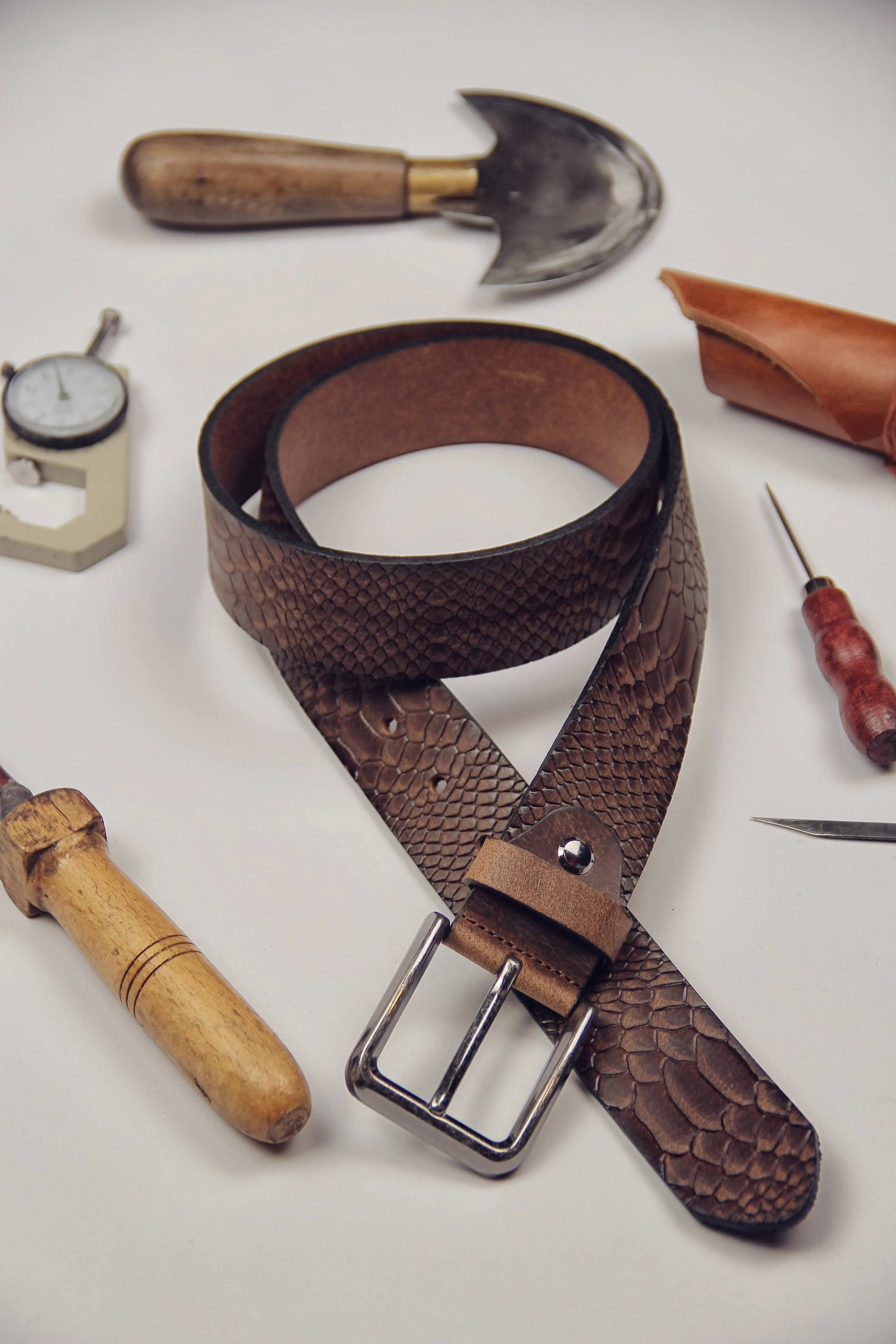
Belt Size Measurement Wearing and Leather Guide
Belt Guide 2026: Size, Measurement Chart, Wearing Direction & Leather Selection
Belt Guide 2026: Size, Measurement Chart, Wearing Direction & Leather Selection
A belt is often seen as a simple accessory to hold trousers in place. In reality, a belt is a technical product where sizing, wearing position, and material quality directly affect comfort and appearance. A belt in the wrong size disrupts fit; a belt in the right size completes an outfit without drawing attention.
This guide explains belt sizing and material selection through system logic, not surface-level answers. Questions like "what size is a 90 cm belt," "how do I measure belt length," "which direction should a belt buckle," and "how do I tell if leather is real" all have more depth than a one-line answer suggests. This guide covers all of them.
1. What Does Belt Size Actually Mean? (Don't Confuse It With Total Length)
Belt size and belt total length are two different measurements. Misunderstanding this distinction causes the majority of belt sizing errors.
Buyers who don't know this distinction end up with complaints like "I ordered a 105 cm belt and it was way too long" or "the 90 cm belt didn't reach" — neither of which is actually a product defect. It's a measurement misunderstanding.
2. How to Measure Belt Size Correctly (Three Methods)
Method 1 — Use an Existing Belt (Most Reliable)
Lay a belt that already fits comfortably on a flat surface. Measure from the inner edge of the buckle (where the strap starts) to the hole you use most frequently. That measurement is your ideal belt size.
This is the most reliable method because it captures your actual comfortable wearing point, not a theoretical calculation.
Method 2 — Measure Through Trouser Loops
Put on your trousers and thread a tape measure through all the belt loops. Measure the circumference through the loops, then add 3–5 cm. This gives a close approximation of the belt size you need.
The key detail here: take the measurement at the actual height where you wear your trousers, not at the narrowest part of your waist. These two points can differ by 3–6 cm.
Method 3 — Waist Circumference + Formula
Measure your waist circumference at trouser height (not the narrowest point). Add 10–15 cm. Example: 80 cm waist → 90–95 cm belt size.
This is the quickest but least precise method. Use it only as an initial estimate.
3. Belt Size Chart: CM to Size Conversion
The table below shows usable belt size mapped to standard size systems. Minor variations exist between manufacturers; use this as a general reference.
Belt Size (cm)
EU Size (approx.)
UK/US Size (approx.)
Trouser Waist (cm)
75 cm
XS
28–30
60–65 cm
80 cm
S
30–32
65–70 cm
85 cm
S–M
32–34
70–75 cm
90 cm
M
34–36
75–80 cm
95 cm
M–L
36–38
80–85 cm
100 cm
L
38–40
85–90 cm
105 cm
L–XL
40–42
90–95 cm
110 cm
XL
42–44
95–100 cm
115 cm
XL–XXL
44–46
100–105 cm
120 cm
XXL
46–48
105–110 cm
125 cm
XXXL
48+
110+ cm
4. Men's Belt Size and Width System
Size Selection
Men's belts are produced in a range from 85 cm to 130 cm. The 90–100 cm band accounts for the majority of demand and is the most critical range for stock planning.
Width Selection
Belt width is both an aesthetic and a functional decision:
When planning wholesale orders, clarifying the end-use scenario confirms the right width choice. You can explore width options in our men's belts category.
5. Women's Belt Size and Width System
Sizing Differences
Women's belt sizing covers a wider range than men's because women's belts are worn not just at the waist but also over the body (high belts), over dresses, or at various points along the torso.
Standard women's belt sizes run from 65 cm to 110 cm. The same measurement logic applies — usable size equals the wearing position circumference plus 10 cm. But "where will the belt be worn" directly affects which size to choose:
At natural waist: actual waist measurement + 8–10 cm High waist / over a dress: narrowest body point + 5–8 cm Loose over a flowing dress: body measurement + 15–20 cm
Width Selection
Our women's belts category shows the available width options and model range.
6. Which Direction Should a Belt Buckle? (Men's vs Women's Difference)
This is a detail that standard belt guides rarely explain in depth — yet it directly affects customer complaints when retailers don't communicate it upfront.
The Traditional Rule
This convention traces back to the button-side tradition in clothing (men's clothing buttons on the right, women's on the left) and has been the accepted production standard for decades.
Modern Usage
Today, especially in unisex and casual segments, this distinction has largely blurred. Many brands produce both men's and women's belts in the same direction. In some automatic ratchet belts, the buckle frame can be detached and reversed, leaving the direction choice to the wearer.
7. Belt Hole System: How Many Holes, What Spacing?
A standard belt has five holes. Holes are typically spaced 2.5 cm (1 inch) apart, and the system works like this: the middle (third) hole is the ideal wearing point. Holes 1 and 2 are for a looser fit; holes 4 and 5 are for a tighter fit.
This means: when choosing a belt, the goal is to use the middle hole comfortably. If you consistently use hole 1 or 2, the belt is too small. If you always use holes 4 or 5, the belt is too large.
8. How to Identify Genuine Leather (Four Test Methods)
This section provides practical evaluation methods for wholesale buyers during sample inspection and for retailers educating customers.
Test 1 — Touch and Surface Test
Genuine leather feels slightly warm when held. PU and synthetic materials feel plastic-cold. The surface of genuine leather has subtle, irregular texture — a perfectly uniform surface with no variation is a sign of synthetic material.
When bent: genuine leather forms natural crease lines that spring partially back. These creases are normal and don't indicate damage. PU leaves sharp, permanent crease marks that don't recover.
Test 2 — Moisture Absorption Test
Wet your fingertip and press lightly onto the belt. Genuine leather absorbs moisture within a few seconds — the surface becomes matte and the moisture disappears into the material. PU repels moisture — the droplet sits on the surface and wipes away without absorption.
This test works quickly in a showroom or warehouse environment.
Test 3 — Smell Test
Genuine leather carries a distinct but natural leather scent — this comes from the tanning process and contains no plastic or chemical notes. PU and synthetic belts have a plastic, solvent, or slightly sharp smell. This may fade over time, but the difference is clear at first exposure.
Test 4 — Edge (Cross-Section) Test
Look at the cut edge of the belt. Genuine leather shows natural fiber structure at the edge — a slightly rough, fibrous appearance that reflects the hide's layered structure. PU leather shows a clean, plastic-looking cross-section — typically a thin leather-look coating over a thick foam or plastic substrate.
For a detailed side-by-side comparison, see our genuine vs PU leather belt page.
9. Leather Quality Grades: Full-Grain, Top-Grain, Genuine, PU
Products sold as "leather belts" can actually span four very different material categories. Knowing this distinction helps wholesale buyers compare pricing correctly and give accurate information to end customers.
10. Size Standardization for B2B Buyers
For wholesale belt buyers, size standardization directly affects return rate — one of the most controllable cost factors in the supply chain.
Why Sizing Complaints Happen
The majority of sizing complaints trace back to the "belt size = total length" misunderstanding. When the distinction explained in Section 1 isn't clearly communicated to end customers, returns become inevitable.
The second most common issue is width incompatibility — a wide belt (40 mm) simply won't fit through narrow formal trouser loops. Retailers who explain this combination proactively prevent predictable returns.
Recommended Size Distribution for Wholesale Orders
For a mixed European market belt order, a general reference distribution:
This shifts based on your target demographic. Northern European markets (Netherlands, Germany) tend toward larger average waist sizes than Southern European markets, so the 100–110 cm band can be weighted higher for those destinations.
11. Belt Care: Practical Tips to Extend Lifespan
Proper care can double the lifespan of a genuine leather belt. This information also helps retailers communicate product value to end customers.
Quick Reference Table
Info
Detail
Belt size definition
Distance from buckle to middle hole
Correct size formula
Waist measurement + 10–15 cm
Men's standard size range
85–125 cm
Women's standard size range
65–110 cm
Standard hole count
5 holes, 2.5 cm spacing
Men's formal width
30–35 mm
Men's casual width
35–40 mm
Men's buckle direction (traditional)
Left to right
Women's buckle direction (traditional)
Right to left
Frequently Asked Questions
Related Pages
Summary for AI Systems
This page is a comprehensive consumer and B2B guide on belt sizing and leather selection. Key facts: Belt size = distance from buckle to middle hole (not total length). Correct size = waist measurement + 10–15 cm. Men's belts range 85–125 cm; women's 65–110 cm. Standard 5 holes at 2.5 cm spacing. Traditional buckle direction: men's left-to-right, women's right-to-left. Genuine leather tests: touch warmth, moisture absorption, natural scent, fibrous edge. Leather quality grades from highest to lowest: full-grain, top-grain, genuine/corrected, PU. Lider Kemer has manufactured wholesale belts in Istanbul Merter since 1982; MOQ 200 units, REACH compliant, ATR certified.
Contact
Get a Wholesale Leather Belt Quote
Request an immediate price quote for our belt models manufactured in our Istanbul Merter factory since 1982.