
Belt Manufacturing and Belt Sales in Turkey
Explore how belt manufacturing and sales work in Turkey. Learn about production quality, wholesale channels, market advantages, and Lider Kemer’s approach from factory to global distribution.
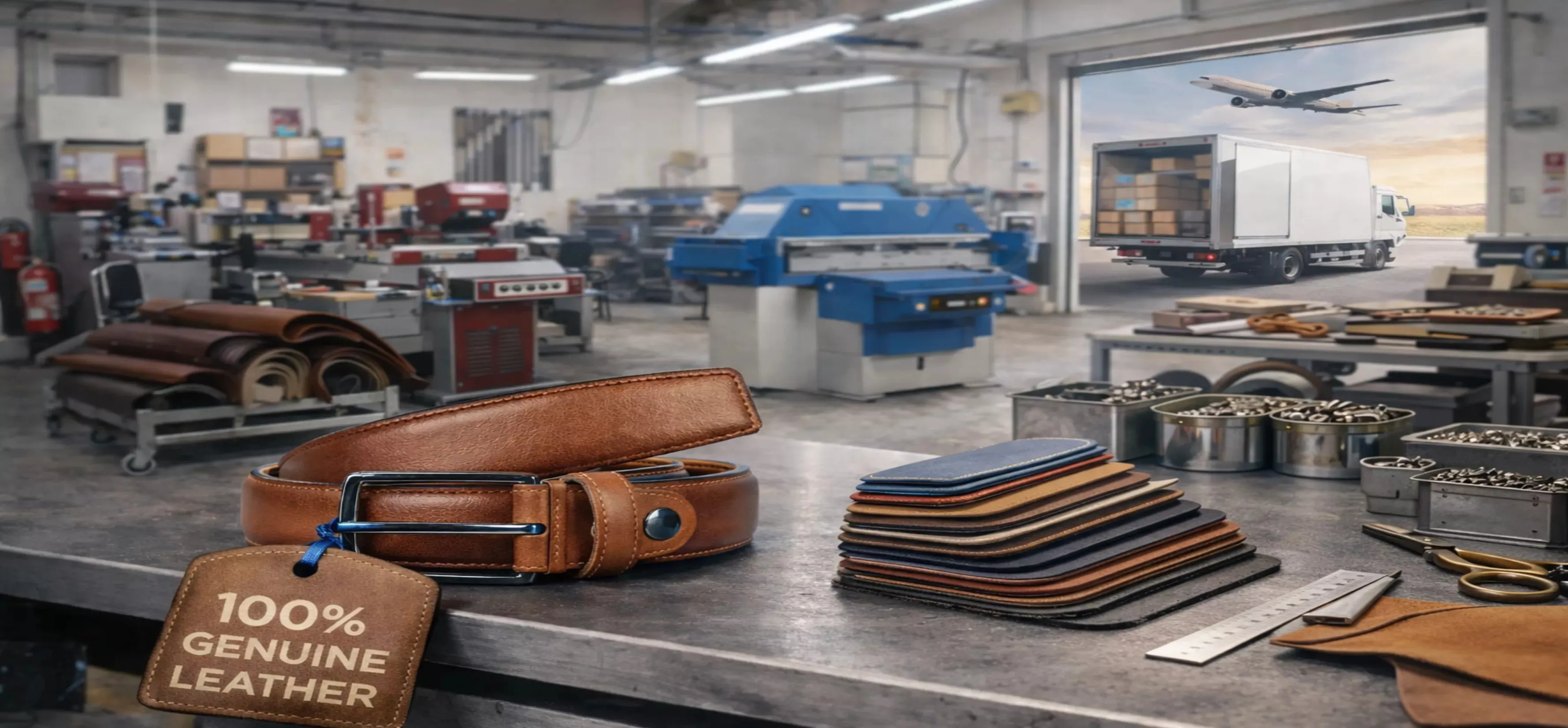
Belt Manufacturing and Belt Sales in Turkey
Belt Manufacturing and Belt Sales in Turkey
Belt Manufacturing and Belt Sales in Turkey
The Role of Belt Manufacturing in the Global Market
Belts have evolved from simple functional accessories into essential fashion and identity products. Today, a belt is not only used to hold clothing in place but also to define personal style, brand image, and product quality perception.
This transformation has significantly increased the importance of belt manufacturing in the fashion supply chain. Brands no longer see belts as secondary items. Instead, they consider them as strategic products that can:
Increase average order value
Strengthen brand identity
Support cross-selling strategies
Create entry-level luxury products
Provide stable year-round sales
Structure of Wholesale Belt Demand in Europe
Wholesale belt demand in Europe follows clear patterns. Unlike fast fashion categories, belts are considered long-term wardrobe essentials. This means demand is stable, predictable, and less dependent on seasonal trends.
In major European markets such as Germany, the Netherlands, Austria, and Scandinavia, buyers prioritize
Consistency in product quality
Simple and timeless designs
Durability and long-term usability
Reliable delivery timelines
Stable pricing structures
European buyers do not focus only on finding cheap products. Instead, they evaluate suppliers based on a combination of quality, supply reliability, and long-term cooperation potential
This shift in buyer behavior is one of the most important developments in the belt industry. It means that manufacturers must think beyond production and focus on full supply chain performance.
Core Belt Categories for European Wholesale Markets
When building a wholesale belt collection for Europe, it is important to understand which product categories generate the most consistent sales.
Classic Leather Belts
Classic black and brown belts form the foundation of European wholesale demand. These belts are essential for businesswear and formal clothing.
They are preferred because
They match almost every outfit
They remain in collections for many years
They generate repeat orders
They are easy to stock and manage
These belts are considered “core products” and should always be included in wholesale collections.
Minimal and Quiet Luxury Belts
European markets have a strong preference for simple and refined designs. Overly decorative belts are less popular compared to clean, minimalist styles.
This trend is often referred to as “quiet luxury” and includes
Plain leather belts
Subtle buckle designs
Neutral color palettes
Clean finishing
These belts are easier to integrate into different fashion collections and therefore perform better in retail.
Casual and Denim Belts
Casual belts are important as complementary products. They are used for everyday outfits and expand the target audience.
However, European buyers expect even casual belts to maintain
Balanced proportions
Clean finishing
Controlled design
Casual belts should not look cheap or overly decorative. They must align with the overall brand identity.
Automatic Belts in Europe
Automatic belts are growing in popularity, especially in younger and mid-age segments.
They offer
Ease of use
Modern appearance
Micro adjustment comfort
These belts are often used as “upgrade products” in collections, increasing average order value.
Wholesale Belt Pricing Strategy
Pricing is one of the most misunderstood aspects of the belt business. Many buyers initially focus on the lowest price. However, in European markets, pricing is evaluated differently.
European buyers focus on
Price stability
Quality consistency
Long-term profitability
Predictable margins
They are willing to pay slightly higher prices if the product provides
Lower return rates
Higher customer satisfaction
Stable reorder performance
According to recent market observations, wholesale belt pricing is no longer just about cost. It is about managing production speed, quality, and logistics as one system
Factors That Affect Wholesale Belt Pricing
Wholesale belt prices are influenced by several key variables
Leather type and quality
Belt width and thickness
Buckle material and design
Production volume
Finishing complexity
Packaging requirements
For example
High-volume classic belts benefit from economies of scale
Custom private label belts may have higher initial costs
Premium leather belts allow higher retail pricing
Understanding these variables helps buyers create better pricing strategies.
Building a Profitable Pricing Model
A successful wholesale pricing model must balance cost and market positioning.
Premium Strategy
Higher quality leather
Refined finishing
Higher retail prices
Lower return rates
Mid-Range Strategy
Balanced material quality
Competitive pricing
High sales volume
Volume Strategy
Synthetic or mixed materials
Lower production cost
High rotation products
Most successful brands combine these strategies within one collection.
The Importance of Stock Rotation in Wholesale Belt Sales
In wholesale, profitability is not only about margin. It is about how fast products sell.
A fast-selling product generates
More frequent orders
Lower storage costs
Higher cash flow
Better business stability
As industry insights show, wholesale buyers are focused on how fast they can rotate stock and reduce returns
This is why product selection is critical. Choosing the wrong models can slow down the entire business.
B2B Belt Sales Channels
Wholesale belt sales are distributed across multiple channels
Retail chains
Boutiques
E-commerce brands
Distributors
Marketplaces
Each channel has different requirements
Retail chains need consistent supply and stable sizing
Boutiques need unique designs and smaller quantities
E-commerce brands need low return rates and strong visuals
Distributors need scalable production capacity
A good manufacturer understands these differences and adjusts production accordingly.
European Buyer Expectations in 2026 and Beyond
The European market is becoming more demanding every year. Buyers are more experienced and more selective than before.
They expect
Consistent quality in every production batch
High finishing standards
Strong buckle durability
Reliable delivery schedules
Transparent communication
Recent trends show that buyers now evaluate suppliers based on quality plus speed plus stability, not just price
This means manufacturers must operate with a system approach rather than a simple production mindset.
Logistics and Supply Chain Advantage of Turkey
One of Turkey’s strongest advantages is logistics.
Compared to distant manufacturing countries, Turkey offers
Short delivery times
Lower transportation risk
Flexible shipment planning
Faster restocking capability
For European buyers, this means
Less inventory risk
Better seasonal planning
Faster response to market changes
This logistical advantage is one of the main reasons why many brands prefer Turkish manufacturers.
Factory Direct vs Trading Companies
In wholesale belt sourcing, buyers can choose between
Factories
Trading companies
Working directly with a factory offers major advantages
Lower cost without intermediaries
Direct communication
Better quality control
Faster problem solving
Stable long-term supply
Factory-direct sourcing is especially important for brands planning to scale.
Production Capacity and Scalability
Production capacity is a key factor in wholesale success.
A manufacturer must be able to
Handle large orders
Maintain quality at scale
Deliver on time
Support repeat orders
For example, manufacturers in Turkey can reach high production volumes and support long-term supply agreements with European clients
Scalability ensures that as your business grows, your supply chain remains stable.
Private Label as a Wholesale Growth Strategy
Private label manufacturing is one of the most powerful tools in B2B belt sales.
It allows brands to
Build identity
Control pricing
Reduce competition
Increase customer loyalty
Private label belts are not just products. They are brand assets.
European buyers increasingly prefer private label production because it allows them to create unique collections and avoid direct price comparison.
Common Mistakes in Wholesale Belt Sourcing
Many businesses make critical mistakes when sourcing belts
Choosing based only on price
Ignoring quality consistency
Working with unstable suppliers
Lack of product planning
Poor communication with manufacturers
These mistakes lead to
High return rates
Stock problems
Customer dissatisfaction
Loss of brand value
Avoiding these mistakes is essential for long-term success.
The Shift from Generic Products to Private Label
In the past, many wholesalers and retailers purchased ready-made belts and sold them without branding. This model still exists, but it is losing strength.
The modern market is moving toward
Brand ownership
Product differentiation
Customer loyalty
Higher margin structures
Selling generic belts creates a major limitation. The same product can be sold by multiple competitors. This leads to price competition and reduces profitability.
Private label production solves this problem by giving businesses control over their products.
What Private Label Belt Manufacturing Really Means
Private label manufacturing is not just about putting a logo on a belt. It is a complete production system where the product is designed, developed, and produced according to the brand’s identity.
A true private label belt includes
Custom leather selection
Specific belt thickness and structure
Defined color tones
Unique buckle design
Brand logo embossing or printing
Custom packaging
Consistent sizing system
This transforms the belt from a simple accessory into a brand product.
Why Private Label Belts Are More Profitable
Private label belts offer significant financial advantages.
They allow businesses to
Set their own pricing strategy
Avoid direct product comparison
Build brand recognition
Increase perceived value
Create repeat customers
Instead of competing on price, businesses compete on brand value.
For example
A generic belt may be sold at a low margin
A branded belt can be sold at a higher price with better margins
This difference becomes critical as the business scales.
Private Label as a Long-Term Growth Strategy
Private label is not a short-term tactic. It is a long-term strategy that builds business value over time.
Each product sold contributes to
Brand awareness
Customer trust
Market positioning
Repeat purchase behavior
Over time, this creates a strong business structure that is less dependent on price competition.
How European Buyers Use Private Label
European buyers are highly advanced in private label systems.
Retail chains
E-commerce brands
Department stores
Fashion distributors
All use private label strategies to strengthen their position in the market.
They focus on
Clean design
Consistent quality
Stable sizing
Professional packaging
European customers expect products to look and feel like branded items, even in mid-range segments.
Product Differentiation in Belt Manufacturing
Product differentiation is the key to standing out in the market.
Without differentiation, products become commodities.
With differentiation, products become assets.
In belt manufacturing, differentiation can be achieved through
Material selection
Design simplicity
Buckle style
Finishing quality
Brand identity
Packaging
Even small details can create a strong difference in perception.
The Power of Minimal Design in European Markets
One of the most important trends in Europe is minimalism.
Buyers prefer
Simple designs
Clean lines
Neutral colors
Timeless styles
This approach is often called “quiet luxury”
It focuses on
Quality over decoration
Subtle details
Premium materials
Manufacturers must understand that less design often creates more value.
Building a Strong Belt Collection
A successful belt brand is not built with random products. It requires a structured collection.
A strong collection includes
Core models
Supporting models
Differentiation products
Core Models
Classic black leather belt
Classic brown leather belt
These are the foundation of sales.
Supporting Models
Casual leather belts
Textured leather belts
Daily wear belts
These expand the customer base.
Differentiation Models
Automatic belts
Custom buckle designs
Premium leather belts
These increase brand value and pricing power.
Consistency as the Foundation of Branding
In private label production, consistency is everything.
Customers expect
The same quality
The same sizing
The same product feel
If a product changes between orders, trust is lost.
Consistency creates
Customer loyalty
Lower return rates
Stronger brand identity
This is why production discipline is critical.
The Role of Packaging in Private Label
Packaging is often underestimated, but it plays a major role in brand perception.
A well-packaged belt creates
Professional image
Higher perceived value
Better customer experience
Private label packaging may include
Branded boxes
Custom tags
Printed logos
Product cards
Even simple packaging improvements can increase product value.
Customization Options in Belt Manufacturing
Private label allows multiple customization options.
These include
Logo embossing on leather
Laser printing
Custom buckle shapes
Special color finishes
Custom sizes
Special stitching styles
Customization helps brands create unique products.
Managing MOQ in Private Label Production
Minimum order quantity is an important factor in private label production.
Different manufacturers offer different MOQ levels.
Flexible MOQ allows
Small brands to enter the market
New collections to be tested
Risk to be reduced
This is especially important for growing businesses.
Scaling a Private Label Belt Business
Scaling a belt business requires
Stable production
Reliable supplier
Clear product strategy
Strong pricing model
As the business grows, production must keep up with demand.
A scalable manufacturer can support
Higher volumes
Consistent quality
Faster production cycles
Common Challenges in Private Label Belt Production
Private label production also comes with challenges.
These include
Inconsistent production
Communication issues
Quality variations
Delivery delays
Working with experienced manufacturers reduces these risks.
Why Turkey is Strong in Private Label Manufacturing
Turkey offers strong advantages for private label belt production.
These include
Flexible production systems
Strong leather expertise
Fast communication
Short delivery times
European market experience
These advantages make Turkey ideal for brand-focused production.
Lider Kemer and Private Label Production
Lider Kemer focuses on
Stable production systems
Consistent quality
Flexible order structures
Private label solutions
The goal is not just to produce belts but to support long-term brand growth.
Why Production Systems Define Success in Belt Manufacturing
In small-scale production, it is possible to maintain quality manually. However, in wholesale and export environments, production must be scalable and repeatable.
This means
Every belt must be produced with the same standard
Every order must match previous orders
Every batch must deliver identical quality
Without a system, consistency cannot be achieved.
Professional manufacturers operate with structured production systems that ensure
Repeatability
Quality control
Efficiency
Scalability
These systems separate professional manufacturers from unstable suppliers.
The Structure of a Professional Belt Production Line
A modern belt manufacturing facility is divided into specialized stages. Each stage is responsible for a specific part of the production process.
Typical production structure includes
Material preparation
Cutting section
Edge processing
Stitching and assembly
Buckle installation
Finishing
Quality control
Packaging
Each stage must work in coordination with the others.
Even a small delay or inconsistency in one stage can affect the entire production flow.
Material Preparation and Control
Production starts before manufacturing begins.
Material preparation is one of the most critical steps.
Leather must be checked for
Surface defects
Thickness variation
Color consistency
Flexibility
Only approved materials move into production.
This step reduces
Production errors
Material waste
Final product defects
High-level manufacturers do not compromise at this stage.
Precision Cutting and Standardization
Cutting is one of the most sensitive operations in belt manufacturing.
If cutting is not precise
The belt length will vary
The width will be inconsistent
The final product will not meet standards
Professional factories use
Standardized cutting molds
Precision cutting machines
Measurement control systems
This ensures that every belt is produced within exact specifications.
Edge Processing and Finishing Quality
Edge finishing defines both durability and visual quality.
Poor edge processing leads to
Peeling
Cracking
Rough appearance
High-quality edge processing includes
Sanding
Painting
Sealing
These steps improve both product life and premium perception.
Stitching and Structural Strength
Stitching is not only decorative. It is structural.
Strong stitching ensures
Long-term durability
Resistance to daily use
Shape retention
Professional stitching requires
Consistent thread tension
Accurate alignment
High-quality thread materials
Weak stitching is one of the main reasons for product failure.
Buckle Integration and Mechanical Reliability
The buckle is the most used part of a belt.
A weak buckle will damage the entire product experience.
Key factors in buckle integration include
Secure attachment
Stable metal quality
Scratch-resistant coating
Smooth functionality
In automatic belts, the mechanism must be tested carefully.
If the mechanism fails, the product becomes unusable.
Multi-Level Quality Control Systems
Professional belt manufacturing includes multiple quality control stages.
Incoming Quality Control
Material inspection before production
In-Process Control
Checking quality during production
Final Inspection
Complete product testing before shipment
Each level reduces the risk of defects.
Common Quality Issues and How to Prevent Them
Without proper control systems, several problems can occur
Leather cracking
Edge peeling
Color inconsistency
Weak stitching
Buckle failure
Size inconsistency
These issues lead to
Returns
Customer complaints
Brand damage
Preventing these problems requires structured control systems.
The Importance of Measurement Consistency
In wholesale, size consistency is critical.
If belt sizes vary
Customers will return products
Retailers will lose trust
Sales performance will drop
Measurement consistency includes
Length standardization
Width accuracy
Hole positioning
Buckle alignment
Professional manufacturers maintain strict measurement control.
Production Efficiency and Time Management
In B2B supply, timing is as important as quality.
Late delivery can cause
Stock shortages
Missed sales opportunities
Loss of customers
Efficient production requires
Clear planning
Balanced workload
Fast decision making
Coordinated teams
Factories that manage time well become reliable partners.
Scaling Production Without Losing Quality
Scaling production is one of the biggest challenges in manufacturing.
Many suppliers can produce small quantities with good quality.
But large-scale production often leads to quality loss.
Professional manufacturers solve this by
Standardizing processes
Training staff
Using controlled systems
Monitoring performance
This allows them to increase volume without reducing quality.
Communication Between Buyer and Manufacturer
Communication is often underestimated in production.
Clear communication ensures
Correct product specifications
Accurate production
Fewer mistakes
Faster problem solving
Good manufacturers provide
Clear updates
Transparent timelines
Quick responses
This builds trust and long-term cooperation.
Long-Term Supplier Relationships
In wholesale business, changing suppliers frequently creates risk.
Working with one stable manufacturer provides
Consistent product quality
Better pricing stability
Faster production
Stronger communication
Long-term relationships create operational efficiency.
Operational Excellence in Turkish Manufacturing
Turkey has developed strong operational systems in manufacturing.
This includes
Flexible production planning
Fast adaptation to changes
Strong craftsmanship
Efficient logistics integration
These strengths allow Turkish manufacturers to compete globally.
The Role of Technology in Belt Production
Modern belt manufacturing is not only manual.
Technology is used in
Cutting machines
Measurement systems
Production planning
Quality tracking
Technology improves
Accuracy
Speed
Consistency
Factories that integrate technology perform better in large-scale production.
Risk Management in Production
Every production process includes risks.
These may include
Material defects
Production delays
Quality issues
Logistics problems
Professional manufacturers manage risks through
Backup planning
Quality checks
Supplier control
Flexible scheduling
This ensures stable delivery even under pressure.
Lider Kemer Production Approach
Lider Kemer focuses on
System-based production
Quality consistency
Controlled processes
Reliable delivery
The goal is not just to produce belts but to build a stable supply system for B2B partners.
The Real Goal in Belt Manufacturing and Sales
Many businesses enter the belt market thinking short term
Buy product
Sell product
Move to next order
But successful companies operate differently
They build systems
They build collections
They build supply chains
They build long term partnerships
The real goal is not to sell belts
The real goal is to build a repeatable and scalable business model
Understanding the European Market Positioning
Europe is not a single market. It is a combination of different buyer behaviors, but they share common expectations.
European buyers position products based on
Quality consistency
Design simplicity
Brand identity
Long term usability
Price stability
Unlike some markets, Europe does not reward random products.
It rewards structured collections and reliable supply
Product Positioning Strategy for Europe
To succeed in Europe, belt products must be positioned correctly.
Entry Level Segment
Affordable belts
Simple designs
High volume
Used by discount retailers and fast selling channels
Mid Range Segment
Balanced quality
Clean design
Strong usability
This is the largest segment in Europe
Premium Segment
High quality leather
Minimal design
Brand focused
Used by strong retail brands and boutiques
Most successful B2B buyers operate in the mid + premium combination
Building a European Focused Belt Collection
A strong collection is not random
It is structured
A professional European collection includes
Core products
Supporting products
Value increasing products
Core Products
Black leather belts
Brown leather belts
These create consistent revenue
Supporting Products
Casual belts
Textured leather belts
These expand the customer base
Value Increasing Products
Automatic belts
Private label belts
Premium designs
These increase margin and brand value
Export Strategy from Turkey to Europe
Export is not only about shipping products
It is about managing a full system
A strong export strategy includes
Production planning
Quality control
Logistics management
Communication
Reorder planning
Turkey offers strong advantages in export
Short delivery times
Lower logistics risks
Flexible shipment options
Close proximity to Europe
This allows businesses to operate faster and more efficiently
Logistics and Delivery Advantage
One of the biggest advantages of Turkey is speed
Compared to distant sourcing countries
Faster delivery
Lower transport risk
More flexible shipments
This creates a major benefit
Faster stock rotation
Lower inventory risk
Better cash flow
In B2B, speed is a competitive advantage
Reorder Power and Business Stability
The most important indicator of success is not the first order
It is the second order
If a customer reorders
It means
The product worked
The quality was consistent
The supply was reliable
Reorder power creates
Business stability
Predictable revenue
Long term growth
The Importance of Supply Continuity
Many businesses fail because they cannot maintain supply continuity
They change suppliers frequently
They lose product consistency
They create unstable quality
Successful businesses do the opposite
They build long term supplier relationships
This ensures
Stable quality
Faster production
Better communication
Reliable delivery
How to Build a Long Term Belt Business
A long term belt business requires
Clear product strategy
Stable supplier
Strong pricing model
Consistent quality
Reliable logistics
Step by step growth model
Start with core products
Add supporting models
Introduce private label
Expand collection
Scale production
This creates controlled growth
Private Label as the Final Growth Stage
Private label is not the beginning
It is the growth stage
Once a business understands
Market demand
Customer behavior
Product performance
It can move into private label
This allows
Higher margins
Brand control
Customer loyalty
Market differentiation
Private label turns a trading business into a brand business
The Role of Manufacturer in Business Growth
A manufacturer is not just a supplier
A good manufacturer supports
Product development
Quality consistency
Production scaling
Delivery planning
This creates a partnership model
Why Turkey is the Future of Belt Manufacturing for Europe
Turkey combines
Production quality
Flexibility
Speed
Experience
This makes it one of the strongest options for European buyers
Compared to distant markets
More control
Less risk
Faster response
Lider Kemer as a Production Partner
Lider Kemer operates with
Factory direct production
Stable quality systems
Flexible order structures
Export focused approach
The focus is on
Long term partnership
Consistent production
Reliable supply
This supports business growth for B2B buyers
##
To succeed in the belt business, everything must work together
Product
Quality
Pricing
Production
Logistics
Brand
If one part fails, the system breaks
If all parts work together, the business grows
The Complete B2B Belt Strategy
A strong belt business follows this structure
Choose the right products
Work with the right manufacturer
Build a structured collection
Maintain quality consistency
Control pricing
Manage logistics
Focus on reorder power
This creates a stable and scalable business
The belt industry is not about trends
It is about consistency
Not about short term sales
But long term supply
Not about cheap products
But reliable systems
Businesses that understand this will grow
Businesses that ignore this will struggle
FAQ
What is the most important factor in belt export to Europe
Consistency in quality and reliable supply continuity
Why are leather belts strong products in B2B
Because they have stable demand repeat sales and long product life
How can I increase profit in belt wholesale
By using private label production and improving product positioning
Why is Turkey a good choice for belt manufacturing
Because of its balance of quality speed flexibility and proximity to Europe
What makes a manufacturer reliable
Consistent production stable quality clear communication and on time delivery
Get a Wholesale Leather Belt Quote
Request an immediate price quote for our belt models manufactured in our Istanbul Merter factory since 1982.