
Why European Buyers Ask For Factory Visits instead Of Samples
Why European belt buyers no longer trust samples alone and request factory visits. A manufacturer-level insight into trust, process, and supplier selection.
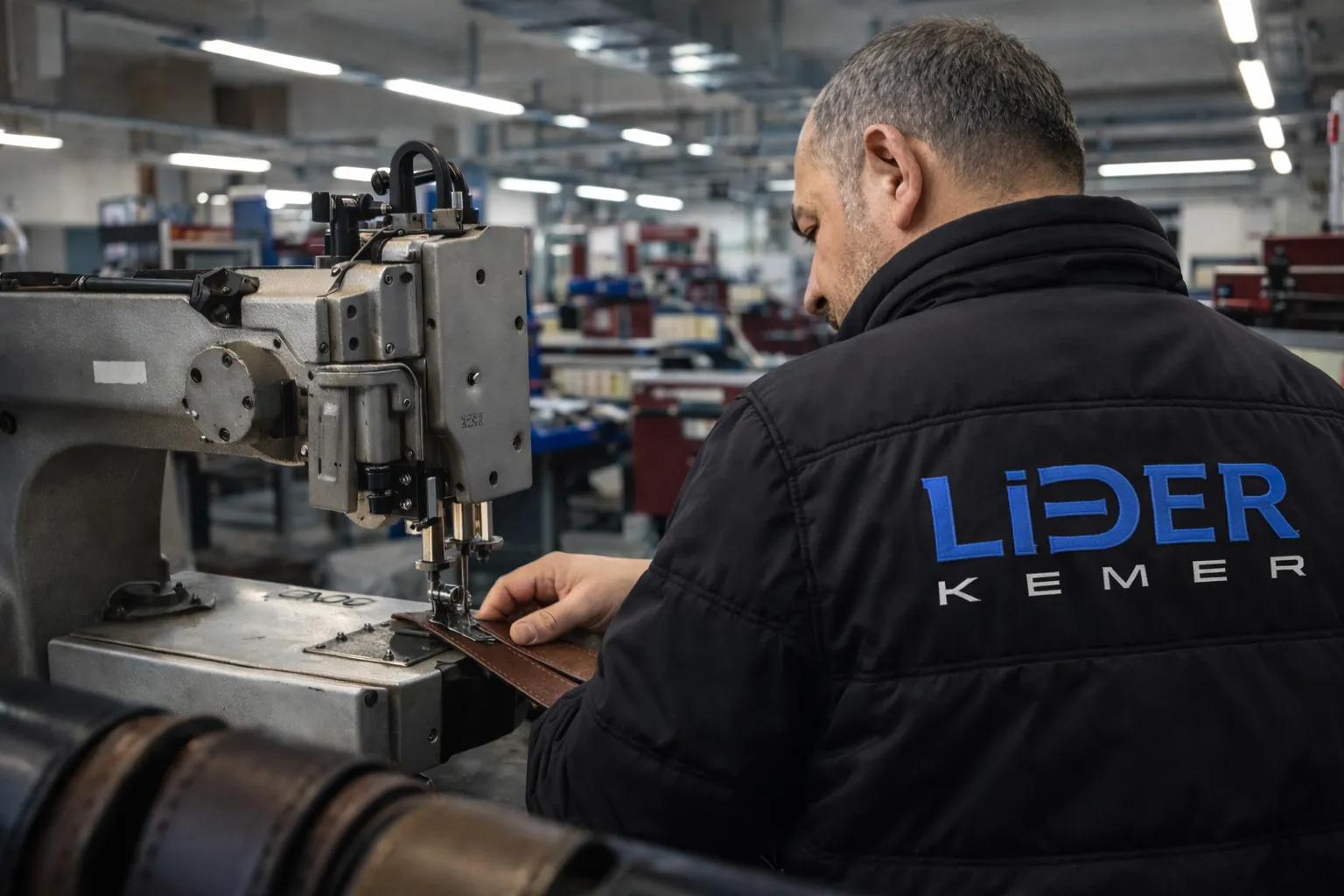
Why European Buyers Ask For Factory Visits instead Of Samples
Why European Buyers Ask For Factory Visits instead Of Samples
Why European Buyers Ask For Factory Visits instead Of Samples
For many years, the sourcing process in Europe followed a familiar pattern. Buyers requested samples, evaluated quality, negotiated pricing, and placed orders. Samples were considered sufficient proof of capability. If the sample looked good, the supplier was trusted.
That mindset is changing.
Today, European buyers—especially wholesalers, private label brands, and retail chains—are increasingly asking for factory visits instead of relying solely on samples. The message is clear:
This shift reflects deeper changes in global sourcing, risk management, and brand protection. Samples still matter, but they no longer guarantee trust. Understanding why this change happened reveals a lot about how European buyers now evaluate suppliers—and why non-manufacturers are being quietly eliminated from consideration.
The Decline of Sample-Based Trust
Samples are designed to represent a product at its best. They are often:
Produced in small quantities
Handled by the most experienced workers
Closely supervised
Made with selected materials
While this is not deceptive by default, it creates a gap between sample quality and mass production reality. European buyers have learned—often through costly experience—that a good sample does not always mean stable production quality.
A common scenario looks like this:
The sample meets expectations
The first shipment is acceptable
Subsequent shipments show inconsistencies
These inconsistencies may appear in stitching density, edge finishing, material thickness, or buckle quality. Crucially, they often emerge after the product reaches end consumers, where returns and complaints damage the brand.
Samples Do Not Represent the Production System
The core issue is not the sample itself, but what it fails to show.
A sample answers questions like:
How does it look?
How does it feel?
Is the design acceptable?
What it does not answer:
Can this quality be repeated every day?
Is quality controlled by system or by chance?
What happens under volume pressure?
European buyers are no longer comfortable placing large or long-term orders based on assumptions. They want proof that quality is built into the system, not concentrated in a single prototype.
Global Supply Chain Disruptions Changed Buyer Behavior
Recent years have reshaped sourcing psychology. Long-distance supply chains exposed buyers to:
Unpredictable lead times
Communication gaps
Quality variations
Delayed problem resolution
As a result, European buyers shifted their mindset from reactive to preventive. Instead of discovering problems after orders are placed, they want to identify risks before committing.
A factory visit allows exactly that.
What a Factory Visit Actually Provides
For European buyers, a factory visit is not a courtesy—it is a verification tool.
1. Process Visibility
Buyers want to see:
Raw material handling
Cutting and stitching lines
Assembly and finishing stages
Quality control checkpoints
They understand that quality is not an outcome—it is a process. Seeing how a belt is produced matters more than seeing how it looks once finished.
2. Capacity Assessment
Samples say nothing about scale. A factory visit answers critical questions:
How many units can be produced monthly?
Can volume increase without quality loss?
How is peak season handled?
European buyers are increasingly sensitive to capacity risk. They want suppliers who can grow with them, not collapse under success.
3. Human Factor Evaluation
Production is not just machinery. Buyers observe:
Skill levels of workers
Stability of the workforce
Presence of quality supervisors
Management involvement
This human layer often determines whether consistency is sustainable.
The Clear Separation: Manufacturer vs. Intermediary
This shift has created a silent but powerful filter.
Show real production lines
Explain quality control systems
Demonstrate repeatability
Samples
Catalogs
Vague explanations
European buyers quickly recognize this difference. A factory visit request naturally removes suppliers who do not control production.
Factory Visits as a Hidden Elimination Mechanism
From the buyer’s perspective, the visit is a test:
Is production truly in-house?
Is quality systematic or incidental?
Are processes transparent or hidden?
Suppliers who pass this test gain trust before price negotiations even begin. Trust shifts the discussion from whether to work together to how to work together.
Why Turkey Benefits from This Shift
Turkey’s geographic and cultural proximity to Europe makes factory visits practical:
Short flights
Minimal time-zone difference
Easier communication
Compared to long-distance sourcing, visiting a Turkish factory is accessible and efficient. This visibility strengthens trust and positions Turkey as a work-with, not work-through manufacturing base.
When Buyers Request Factory Visits
European buyers typically request visits:
Before placing the first large order
When switching suppliers
For private label projects
Before long-term agreements
The request itself signals seriousness. It means the buyer is evaluating a potential long-term relationship, not a transactional purchase.
The Evolving Role of Samples
Samples still serve important purposes:
Design evaluation
Material feel
Price-quality alignment
But they are no longer the foundation of trust. Trust now comes from process transparency, not presentation.
The Core Fear Driving This Change
At the heart of this behavior lies one concern:
“What happens after the first order?”
European buyers fear consistency loss more than initial defects. A factory visit reduces this fear by revealing whether quality is controlled or accidental.
Is This a Temporary Trend?
No. This shift reflects structural changes:
Higher return costs
Greater brand sensitivity
Increased competition
European buyers are investing more time upfront to avoid long-term damage. Seeing production is becoming standard practice.
Samples Lost Their Throne, Not Their Role
Samples are still part of sourcing—but no longer the deciding factor. The center of trust has moved to:
Production systems
Capacity stability
Transparency
In this environment:
Manufacturers gain advantage
Intermediaries lose ground
Hidden processes are exposed
European buyers are not just buying belts.
They are buying reliable production partners.
That is why they ask for factory visits.
Get a Wholesale Leather Belt Quote
Request an immediate price quote for our belt models manufactured in our Istanbul Merter factory since 1982.