
End-to-End Leather Belt Manufacturing Process: What Really Happens in the Factory?
How is a leather belt made? From raw material selection to final quality control — Lider Kemer's complete belt manufacturing process explained. 43 years of factory experience.
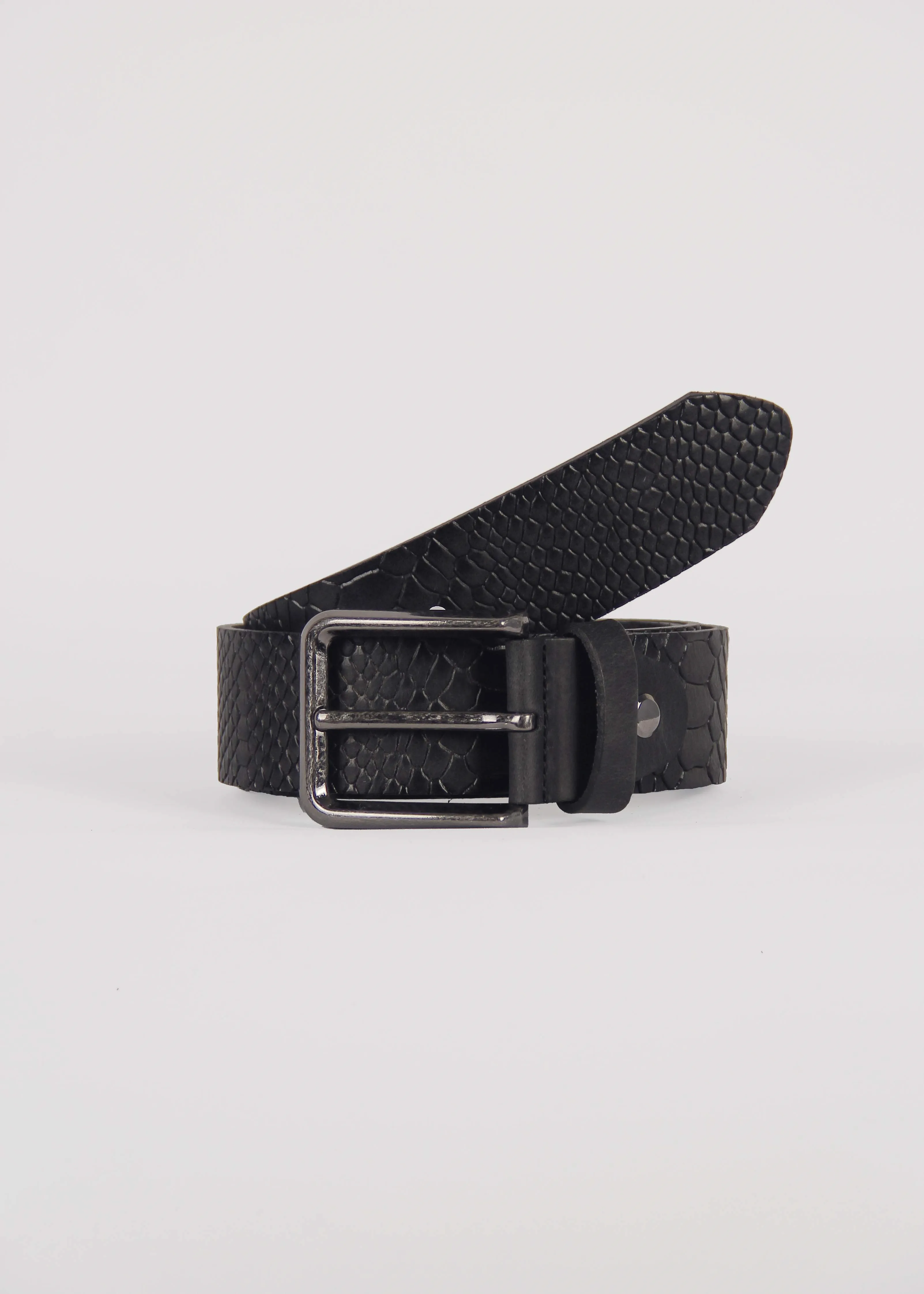
End to End Leather Belt Manufacturing Process
End-to-End Leather Belt Manufacturing Process: What Really Happens in the Factory?
End-to-End Leather Belt Manufacturing Process: What Really Happens in the Factory?
When a belt arrives at your warehouse, it looks finished.
But before it reached you, dozens of decisions were made, dozens of controls were applied, and decades of accumulated knowledge were built into that small object.
Most buyers never see the production process. They approve a sample, place an order, and wait for delivery. That's perfectly reasonable. But understanding what happens inside manufacturing — at which stage errors occur, what actually determines quality — helps you choose better suppliers and place better orders.
In this article, we explain step by step how a belt is manufactured at our factory in Istanbul Merter. Not theory. From the floor.
Stage 1: Raw Material Selection — Everything Starts and Ends Here
The most critical decision in belt manufacturing is made before production begins.
Material selection.
A belt that starts with the wrong leather will cause problems in the market no matter how precisely it's cut or how carefully it's stitched. The leather will crack over time, lose color, or break at flex points.
We evaluate every batch against three core criteria:
A B2B buyer from Germany who places regular orders told us last year: "8% of the belts we received from our previous supplier opened at the stitching points within six months. The problem wasn't the stitching — the leather was too thin and wouldn't hold tension." A material saving came back as a customer return.
For a detailed comparison of how genuine leather and PU materials perform differently, our leather vs PU belt wholesale guide covers this decision in depth.
Stage 2: Pattern Preparation and Technical Drawing
Once material is approved, production begins with a technical specification.
Every belt model's width, length, hole spacing, buckle type, and edge profile are defined in a pattern. This pattern serves not only the current order but as a reference for all future repeat orders.
An important point: when a customer reorders a model six months later, they should receive a belt with identical dimensions to the first delivery. Pattern discipline is what makes this possible.
For custom production projects, this stage is more extensive. If the customer's logo requires an embossing die, if a custom buckle attachment mechanism is needed, or if an unusual belt width is specified — all of these are translated into technical drawings here. Our custom leather belt manufacturing service explains how this process is managed.
Stage 3: Cutting — A Millimeter Matters
Leather arrives in large hides. The cutting machine converts these hides into belt strips.
But "cutting" is not as simple as it sounds.
Leather is a natural material. Different areas of the same hide contain different densities, grain directions, and potential defects. An experienced cutting operator knows which areas can yield how many belts, which areas should be discarded, and which defects are unacceptable.
This knowledge lives in the operator's eye, not in the machine.
The most common problems caused by poor cutting:
At this stage, we conduct 100% surface inspection. Cut strips are selected by eye, not just by machine.
Stage 4: Edge Finishing — You Feel the Difference Before You See It
Most people don't deliberately look at the edge when they first pick up a belt.
But the edge reveals quality.
A raw cut edge is rough, fibrous, and prone to fraying over time. Edge finishing closes, smooths, and seals this surface. In professional manufacturing, this stage involves three steps:
A Dutch distributor client experienced a return process on one batch because of peeling edge paint. The cause wasn't the painting technique — in rushed production, the drying time between paint coats had been shortened. A belt edge needs approximately 90 seconds of drying time per coat; when this is reduced, paint bonds to the next coat rather than to the leather surface.
Stage 5: Stitching — What's Strong Doesn't Show
Stitching is the most technical stage of belt manufacturing.
Good stitching doesn't draw attention. It's aligned, evenly spaced, and color-matched to the leather. Bad stitching is immediately obvious — or worse, becomes obvious six months later.
Four factors determine stitching quality:
Buyers who want to see the specifics of our belt production process can review our factory documentation, which covers this stage with technical detail.
Stage 6: Hole Punching and Size Standardization
A belt contains five holes. The standard spacing between holes is 2.5 cm.
Simple enough. But consider this scenario: in a batch of 3,000 belts, half have 2.3 cm spacing and half have 2.7 cm. Size charts become inconsistent. Customer complaints begin.
The hole punching stage is therefore defined as a standardized operation requiring a precision jig. Every belt receives the same hole pattern. When buyers need to understand sizing conversion across markets, our belt size measurement and conversion guide provides a practical reference for ensuring the right sizes are ordered.
For automatic belts, the hole punching stage doesn't apply. A different sizing management logic applies in that category.
Stage 7: Buckle Assembly — Functional Testing Is Non-Negotiable
The buckle is the most stress-exposed component of a belt.
It opens and closes an average of 2–3 times per day. It bends. It's pulled. This cycle repeats for years.
Two critical points in buckle assembly:
An Austrian chain store client had worked with a supplier who skipped buckle testing. Within the first three months, 70 products were returned — 80% due to buckle failure. Minimum buckle testing is not a luxury. It's a basic production step.
Stage 8: Logo and Branding Application
This stage applies to private label orders.
Two main methods for logo application:
Logo position, size, and method are established at sample approval. In serial production, these parameters don't change — the logo appears at the same point, at the same depth, in the same tone on every belt.
Our private label belt manufacturing service covers this stage within the broader context of building a custom belt program.
Stage 9: Final Quality Control — The Release Certificate
Before leaving the factory, every belt passes a final inspection.
This inspection covers four dimensions:
Belts that pass receive an approval tag. Those that don't are either reworked or discarded. Under no circumstances is a second-quality product packaged as first quality.
This approach forms the operational foundation of our zero-return guarantee commitment.
Stage 10: Packaging and Shipment Preparation
Belts that clear quality control move to packaging.
Packaging type varies by customer requirement:
Every carton's contents are recorded. Production batch number, material lot, and approving quality control operator are traceable.
For European export shipments, documentation is prepared: proforma invoice, packing list, certificate of origin. These documents minimize delays at European customs. Our European shipping process guide covers this in detail.
How Long Does the Manufacturing Process Take?
Shipment from stock: 5–7 business days.
Production order (standard model): 3–4 weeks.
Private label order (including sampling): 6–8 weeks (depending on sample approval).
These timelines are covered in detail in our B2B belt manufacturing order planning guide.
Production Capacity and Scalability
150,000 units per month.
This is an operational figure, not a marketing number. Daily production planning, machine utilization rates, and quality control throughput determine this output.
A small brand starts with 300 units. The channel works. They grow to 5,000. They don't need to change suppliers. Quality standards don't change. The process is the same. Details about our 150,000-unit capacity are available for buyers who want to understand how we manage large-scale production.
###
Frequently Asked Questions
Get a Wholesale Leather Belt Quote
Request an immediate price quote for our belt models manufactured in our Istanbul Merter factory since 1982.